
Retiring together on the exact same Friday afternoon sounds romantic, but staggering your exit dates often builds a far stronger financial foundation. Embracing an asynchronous retirement strategy allows you to bridge critical health insurance gaps before Medicare, maximize lifetime Social Security payouts, and protect your nest egg from market volatility. According to research from Ameriprise Financial, 62% of couples now retire more than a year apart, turning what used to be a logistical headache into an intentional financial power move. By coordinating your departure dates around your age gap, health benefits, and tax brackets, you can eliminate career burnout while securing long-term wealth for both spouses.

At a Glance: The Power of Asynchronous Retirement
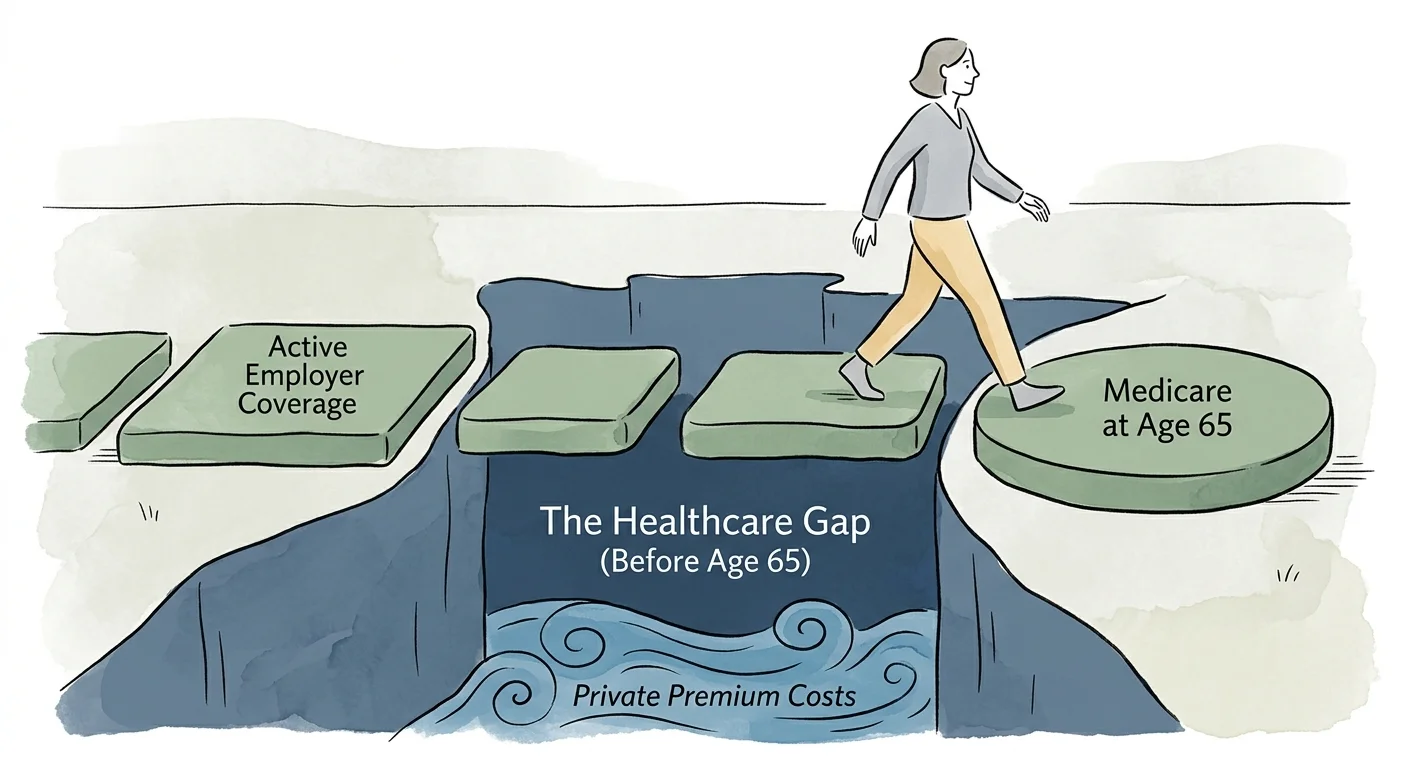
- Healthcare Continuity: One spouse stays employed to keep employer health coverage until the other partner qualifies for Medicare at age 65.
- Social Security Optimization: Delaying the primary earner’s claim past Full Retirement Age (FRA) generates an 8% annual increase in guaranteed income up to age 70, strengthening long-term survivor benefits.
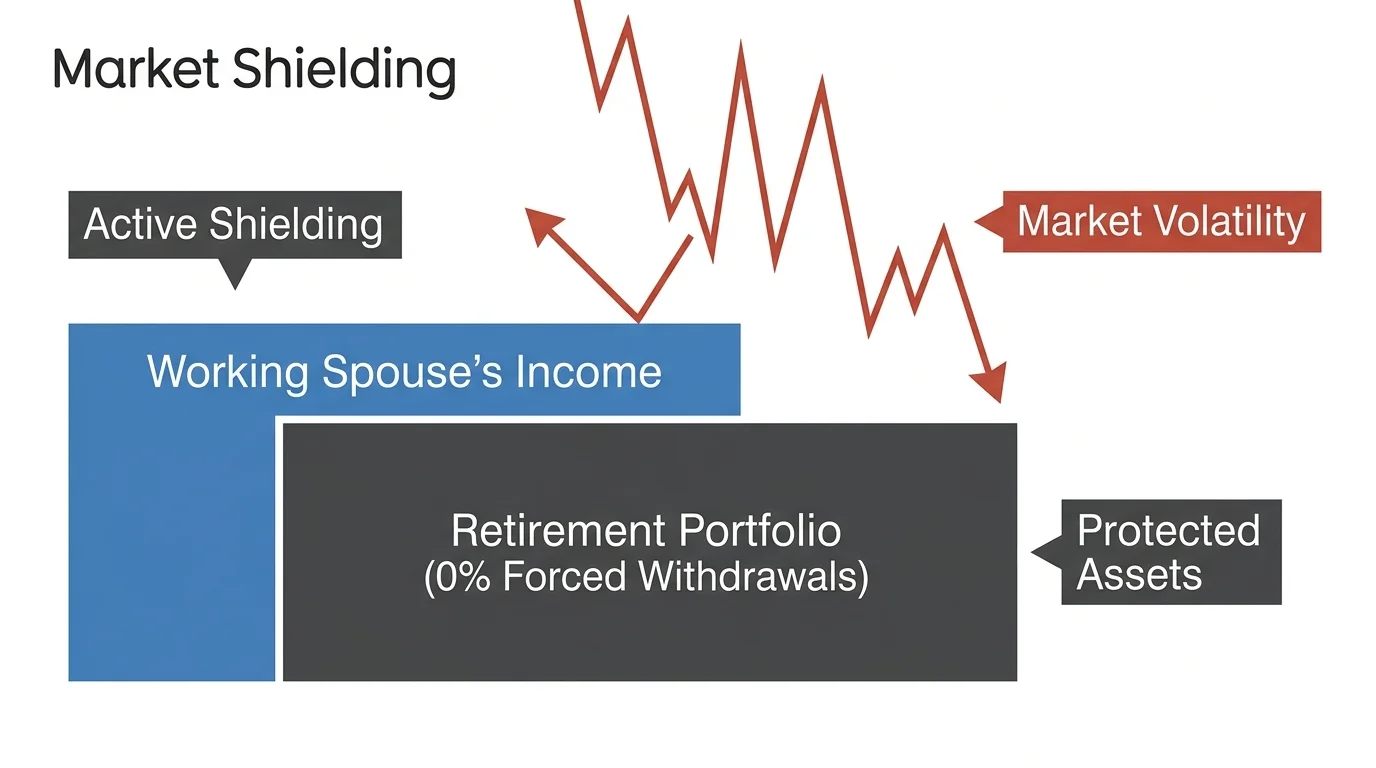
- Market Shielding: Continued income from one working spouse reduces portfolio withdrawals during market downturns, blunting sequence-of-returns risk.
- Tax Efficiency: Dropping into a lower combined tax bracket allows you to execute strategic Roth IRA conversions at lower tax rates.
- Psychological Transition: Phasing retirement one spouse at a time reduces marital friction and creates individual space to establish new routines.

The New Reality of Couples Retirement Planning
For decades, popular culture depicted retirement as a simultaneous event—spouses wrapping up their careers on the exact same day, receiving dual golden watches, and sailing off together. Financial reality, however, rarely aligns with Hollywood scripts. Spouses often differ in age by several years; career trajectories vary, and personal health needs diverge. Attempting to force two separate professional lives into a single exit date frequently results in expensive health insurance gaps, inflated tax bills, and unnecessary drain on retirement savings.
Data clearly reflects this shift toward individual exit timelines. A study by Ameriprise Financial revealed that only 11% of married couples retire at the exact same time, while 62% retire more than a year apart. Furthermore, research from Fidelity Investments highlights a common gap in couples retirement planning: 43% of married couples disagree on the age at which they expect to retire, and 54% admit they do not know how much they need to save jointly. When you treat retirement as a coordinated, multi-stage strategy rather than a single joint event, you turn potential disagreements into a synchronized financial roadmap.
Strategic Financial Wins of an Asynchronous Retirement Strategy
Choosing staggered retirement for couples offers tangible financial advantages. Rather than relying entirely on investment savings on day one, you build a hybrid transition where earned income subsidizes household expenses while unlocking tactical tax and benefit options.
1. Bridging the Healthcare Gap Before Medicare
Healthcare expenses represent one of the largest unpredictable costs in early retirement. Because Medicare eligibility begins strictly at age 65, retiring earlier requires you to secure private health coverage, utilize COBRA benefits, or purchase coverage through the ACA marketplace. These options can cost an individual anywhere from $600 to well over $1,200 per month in premiums alone before accounting for high deductibles.
If you have an age gap between you and your spouse, staggering your departure dates solves this hurdle. When one spouse remains in the active workforce, they can maintain employer-sponsored group health insurance that covers both partners. A 62-year-old spouse can retire comfortably while a 60-year-old spouse works three more years, bridging the gap until the older spouse turns 65 and transitions onto Medicare Part A and Part B.
2. Supercharging Social Security and Survivor Benefits
Retirement timing directly impacts your lifetime Social Security baseline. For individuals born in 1960 or later, Full Retirement Age (FRA) is 67. Claiming benefits early at age 62 results in a permanent benefit reduction of up to 30%. Conversely, for every year you delay claiming past your FRA up to age 70, the Social Security Administration increases your monthly payout by 8% through delayed retirement credits.
An asynchronous retirement strategy lets the higher-earning spouse stay in the workforce longer—or simply delay claiming benefits—while the household relies on the working spouse’s income. This delay increases the primary earner’s monthly payout for life. Crucially, it also protects the younger or lower-earning spouse through survivor benefits; upon the death of the primary earner, the surviving spouse inherits 100% of the deceased spouse’s monthly benefit check if it is larger than their own.
“The best financial plan is the one that accounts for reality, not romantic idealization—staggering retirement gives couples tax flexibility and safety that simultaneous retirement simply cannot match.” — Ed Slott, CPA and Tax Expert
3. Neutralizing Market Risk with Income Buffers
Sequence-of-returns risk poses a significant threat to a newly retired portfolio. If the stock market experiences a severe downturn during the first three to five years of your retirement, pulling income from declining assets accelerates portfolio depletion and permanently undermines compound growth.
When you stagger retirement timing for spouses, the remaining paycheck acts as a reliable shock absorber. The working spouse’s income pays for recurring fixed costs—such as housing, utilities, insurance, and groceries—reducing or completely eliminating the need to liquidate investments during a bear market. This buys your portfolio time to recover while maintaining your standard of living.
4. Unlocking Low-Tax Roth Conversions
Tax management represents another compelling argument for asynchronous retirement. When one spouse retires while the other works, total household gross income drops significantly. This drop places you into a lower tax bracket, opening a lucrative window for tax planning before Required Minimum Distributions (RMDs) kick in at age 73 or 75.
During these lower-income bridge years, you can convert traditional tax-deferred IRA or 401(k) funds into a Roth IRA. You will pay taxes on the converted amounts at today’s lower tax rate, allowing those funds to grow tax-free for the rest of your life. Review current tax tables on IRS.gov to determine how much headroom you have in the lower federal tax brackets before executing annual Roth conversions.
Comparing Strategic Approaches: Simultaneous vs. Staggered Exit
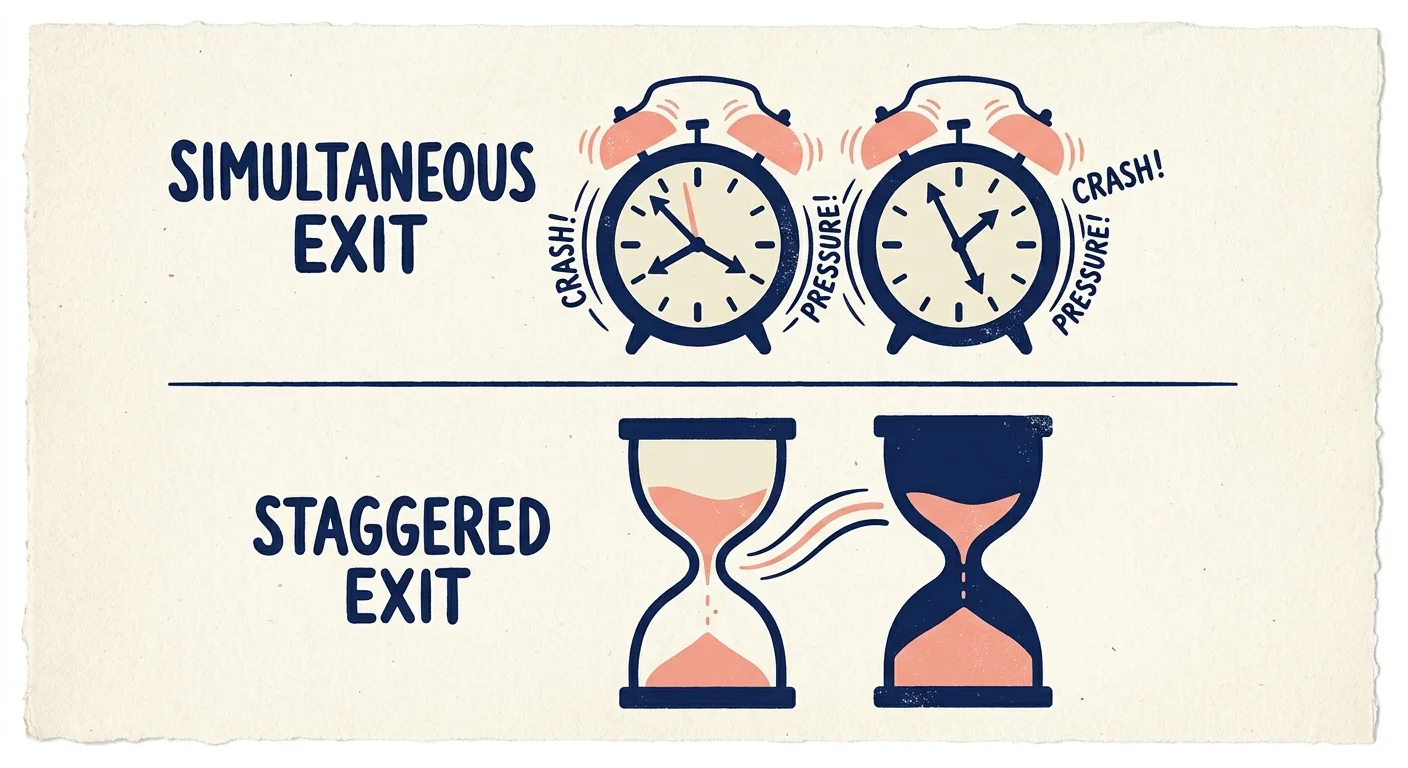
To help you evaluate your strategy, this comparison highlights how retiring simultaneously compares to implementing a staggered exit plan:
| Planning Factor | Simultaneous Retirement | Staggered (Asynchronous) Retirement |
|---|---|---|
| Healthcare Costs | High risk of costly private or COBRA premiums if both spouses retire before age 65. | Optimized; working spouse provides employer health coverage until Medicare eligibility. |
| Social Security Payouts | Higher probability of early claiming due to immediate household cash flow needs. | Allows the primary earner to delay claiming until age 70, gaining an 8% annual boost. |
| Portfolio Withdrawal Rate | Immediate 100% reliance on savings, exposing nest egg to sequence risk. | Gradual transition; working spouse’s wage covers living expenses and buffers market drops. |
| Tax Bracket Flexibility | Sudden plunge in income, followed by potential RMD spikes later in life. | Multi-year low-income windows ideal for tactical, low-tax Roth IRA conversions. |
| Psychological Adjustment | Both spouses experience routine changes, identity shifts, and full-time togetherness at once. | Phased adjustment; one spouse builds a routine while the other completes their career. |

Emotional and Psychological Dynamics of Retiring at Different Times
While the financial benefits of staggered retirement are compelling, managing the emotional shift requires intentional communication. Retiring is not simply a financial calculation; it represents a major identity shift. When one spouse goes to work every morning while the other relaxes on the patio, balance can warp into resentment if you do not manage expectations proactively.
The newly retired spouse often feels a liberating sense of freedom, while the working spouse may feel stuck in the daily grind. Conversely, the working spouse might resent coming home to find household chores unfinished, while the retired spouse feels unfairly pressured to act as a full-time domestic manager. To maintain harmony, set clear operational rules before either person submits a retirement notice.
“Retirement isn’t a single finish line you cross together; it is an individual journey that you navigate side-by-side.” — Jean Chatzky, Financial Journalist and Author
Focus on these key guidelines to keep your relationship strong during an asynchronous transition:
- Redefine Household Contributions: Re-allocate domestic duties so the retired spouse takes on more daily maintenance without making the working spouse feel like a simple paycheck provider.
- Protect Individual Freedom: Allow the retired spouse to establish independent hobbies, join community groups, or pursue travel without feeling guilty about free time.
- Schedule Shared Quality Time: Plan weekend getaways, evening date nights, or brief vacations so the working spouse enjoys immediate lifestyle perks.
- Establish a Firm Final Date: Give the working spouse a concrete target date for their own exit; knowing there is a firm finish line prevents career fatigue.
Avoiding Common Errors in Asynchronous Retirement
Even well-intentioned couples run into predictable traps when executing a staggered retirement. Avoiding these mistakes ensures your transition stays on track financially and emotionally:
1. Forgetting Early Withdrawal Tax Penalties
If the retired spouse stops working before age 59½, withdrawing funds from traditional IRAs or 401(k)s triggers a 10% early withdrawal penalty alongside standard income taxes. Unless you qualify for specific exceptions—such as the Rule of 55 for employer 401(k) plans or Rule 72(t) distributions—rely on taxable brokerage accounts or liquid savings to cover cash flow gaps during early retirement.
2. Mismanaging Spousal Social Security Calculations
A lower-earning spouse cannot claim a spousal Social Security benefit until the primary earner has officially filed for their own retirement benefit. If the primary earner delays claiming until age 70 to maximize their payout, the younger spouse cannot collect a spousal benefit on that record in the interim. Account for this rule when calculating household cash flow projections.
3. Ignoring the Impact on Employer Benefits
When the working spouse drops from full-time to part-time status to ease into retirement, verify how reduced hours affect employee benefits. Many employers require workers to log at least 30 hours per week to maintain eligibility for group health insurance. Losing health coverage prematurely undercuts one of the main financial goals of staggered retirement.
4. Failing to Adjust Emergency Reserves
Dropping from two steady incomes to one reduces your household cash buffer. Ensure you maintain an emergency fund containing six to twelve months of liquid living expenses in a high-yield savings account before the first spouse leaves the workforce.

When DIY Isn’t Enough
While many couples handle retirement timing independently, certain complex scenarios demand professional guidance. Consider consulting a fee-only Certified Financial Planner (CFP) or a Certified Public Accountant (CPA) through resources like the CFP Board under the following conditions:
- Large Age Gaps (7+ Years): Significant age differences create long gaps between Medicare eligibility dates and complex Social Security optimization curves.
- Defined Benefit Pensions with Survivor Options: Choosing between single-life, joint-and-survivor, or period-certain pension payouts permanently impacts income for the remaining spouse.
- Substantial Tax-Deferred Portfolios: Large traditional IRA balances require multi-year Roth conversion strategies to prevent massive tax hits when RMDs begin.
- Unvested Equity or Stock Options: Navigating executive compensation packages, stock options, and non-qualified deferred compensation demands careful departure timing to avoid leaving money on the table.

Step-by-Step Strategy to Implement Staggered Retirement
Ready to plan your asynchronous retirement? Follow this practical checklist to align your finances and lifestyle goals:
- Map Out Your Milestones: Create a visual timeline tracking both spouses’ ages, Medicare eligibility dates (age 65), Social Security FRA (age 67), and age 70.
- Audit Your Healthcare Coverage: Confirm that the working spouse’s employer plan covers spousal dependents efficiently until the retired spouse reaches age 65.
- Calculate Baseline Monthly Expenses: Determine your mandatory living costs and evaluate how much of that burden the working spouse’s remaining income covers.
- Draft a Social Security Game Plan: Use claiming tools or consult the Social Security Administration to calculate optimal filing ages for primary and spousal benefits.
- Model Multi-Year Tax Conversions: Identify low-income years between the first spouse’s retirement and RMD age to systematically convert pre-tax assets into Roth IRAs.
- Set Open Monthly Check-Ins: Revisit your timeline every six months to review budget accuracy, job satisfaction, health status, and psychological comfort.
Frequently Asked Questions
Can a retired spouse claim Social Security while the other spouse continues working?
Yes. A retired spouse who has reached at least age 62 can claim their own earned Social Security record regardless of whether their partner continues working. However, if the retired spouse claims before their Full Retirement Age (FRA), their monthly benefit will be permanently reduced. Additionally, they cannot claim a spousal benefit on the working spouse’s record until the working spouse officially files for benefits.
How does staggered retirement affect health insurance if the working spouse loses their job?
If the working spouse experiences an unexpected job loss, it qualifies as a Special Enrollment Period event, allowing both spouses to enroll in health coverage through the ACA marketplace outside standard open enrollment periods. Alternatively, you can elect COBRA coverage to extend employer benefits for up to 18 months, though you will be responsible for paying the full premium cost.
Is staggered retirement practical if spouses are the same age?
Yes. Even without an age gap, staggering retirement by two to three years allows couples to test their retirement budget, lower their overall tax liability through partial income, and give the first retiree time to transition emotionally while maintaining an income cushion for the household.
Taking Your Next Steps Together
Staggering your retirement timing transforms a traditional, rigid boundary into a flexible, multi-step transition. By coordinating your departure dates around health insurance eligibility, tax brackets, and Social Security claiming strategies, you secure actionable financial wins while easing the emotional transition into senior living. Explore options through organizations like AARP and official government resources as you refine your plan.
Sit down with your partner today and start open conversations about your target retirement dates, health insurance needs, and ideal daily routines. Re-evaluating your exit timelines now will ensure you build a resilient, comfortable, and fulfilling retirement together.
This article provides general retirement education and information only. Everyone’s financial situation is unique—what works for others may not work for you. For personalized advice, consider consulting a qualified financial professional such as a CFP or CPA.
Last updated: February 2026. Retirement benefits, tax laws, and healthcare costs change frequently—verify current details with official sources.