
Taxation and Medicare Implications
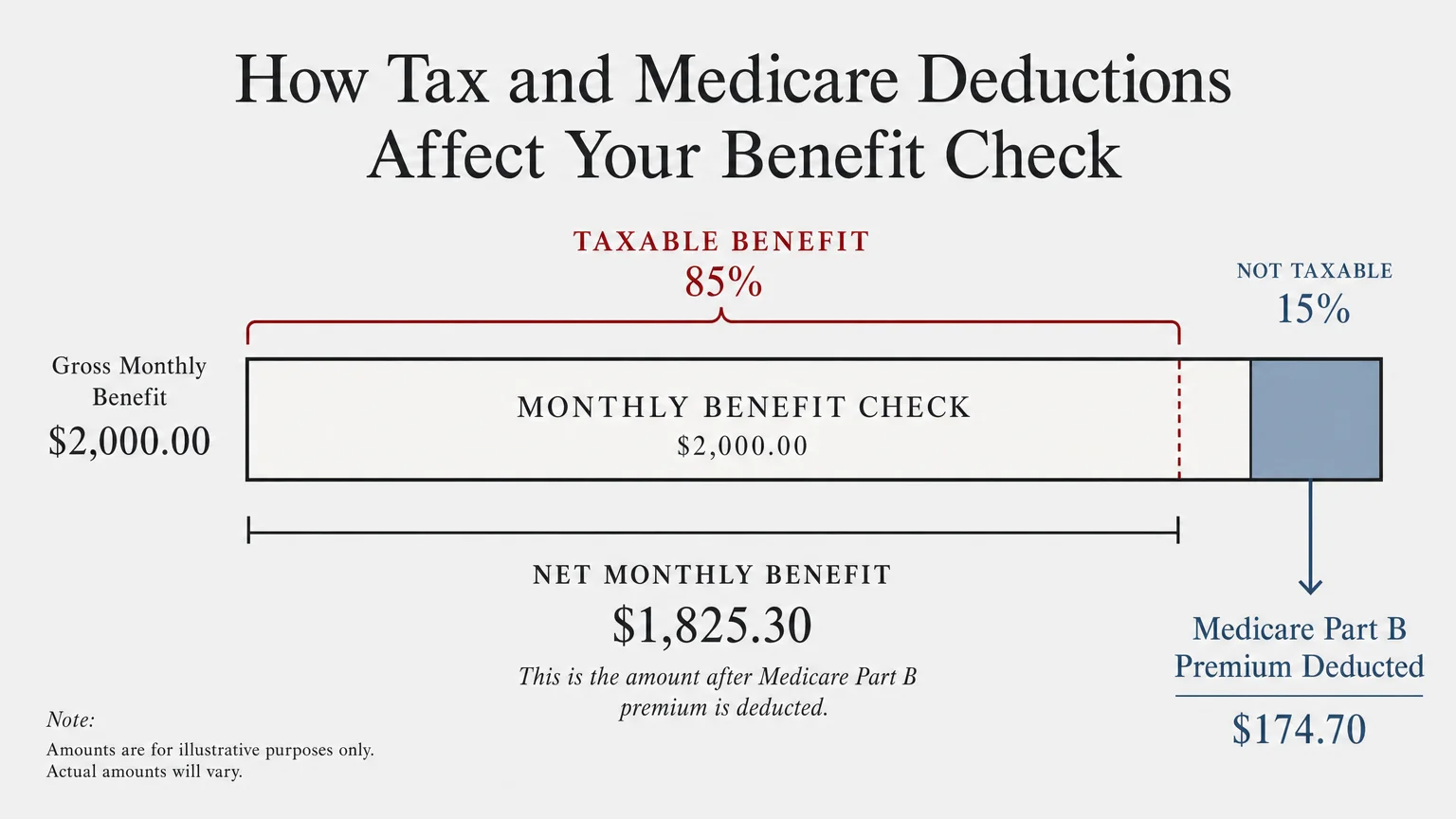
Claiming a divorced spouse benefit increases your overall household income, which triggers secondary financial effects. Chief among these is the taxation of your Social Security benefits. The IRS determines the taxability of your benefits based on your “provisional income,” calculated by adding half of your annual Social Security benefits to your adjusted gross income and any non-taxable interest.
If you file your taxes as a single individual and your provisional income falls between $25,000 and $34,000, up to 50% of your benefits may be taxable. If your provisional income exceeds $34,000, up to 85% of your benefits become subject to federal income tax. Proper withdrawal strategies from your standard retirement accounts can help mitigate this tax burden.
Higher income also affects your healthcare costs. For those enrolled in Medicare, an increase in your adjusted gross income could trigger an Income-Related Monthly Adjustment Amount (IRMAA). For 2026, the standard Medicare Part B base premium is $201.96; exceeding specific income thresholds will force you to pay surcharges on both your Part B and Part D premiums. Review current thresholds at Medicare.gov when projecting your net retirement income.









what if we are legally seperated
How can I get started with finding out if I am eligible
What if one remarries but the spouse does not have a green card and then divorces
I do not receive a social security check because I have I don’t have enough quarter hours I have a pension how do I receive benefits from my ex marriage as far as medical benefits
I was married for 23 years. I already am receiving SS. I didn’t know I can take hers. She is 65 years old can I get her SS shich is higher then mine?
Once you want to claim your own benefits..can you stop 1/2 payment from your ex & start your own since it is higher?
The increase is only your benefit amount or his. Whichever is the higher. No stacking of yours & some of his. Men usually earn more then a woman. You are entitled to the higher amount & it doesn’t affect his monthly amount he gets. Call the SS administration. This is something I’ve known about since I was in my 40’s, it’s unfortunate that SS keeps it quiet. You are entitled to his monthly amount, instead of yours, if his is higher.
Could depend if you were in a common law state. Call SS admi to find out
Call SS & find out
No. Just your own benefits. Gotta have 10 yrs of marriage to collect off of a spouse