A surprise phone call from someone claiming to be a federal agent can trigger immediate anxiety. When an aggressive caller says your Social Security number faces suspension, clear thinking becomes difficult.
Fraudsters intentionally weaponize fear and urgency to steal your hard-earned retirement savings. Learning how to spot a fake SSA caller protects both your financial independence and your peace of mind.
This guide reveals ten blatant signs of a Social Security impersonation scam, along with actionable steps to verify legitimate government outreach.
The Alarming Rise of Social Security Impersonation Scams
Government impersonation fraud remains one of the fastest-growing threats to American retirees. Criminal syndicates exploit the trust seniors place in the Social Security Administration (SSA).
According to Federal Trade Commission (FTC) data released in June 2026, Americans reported losing a record $3.5 billion to imposter scams in 2025 across more than one million complaints.
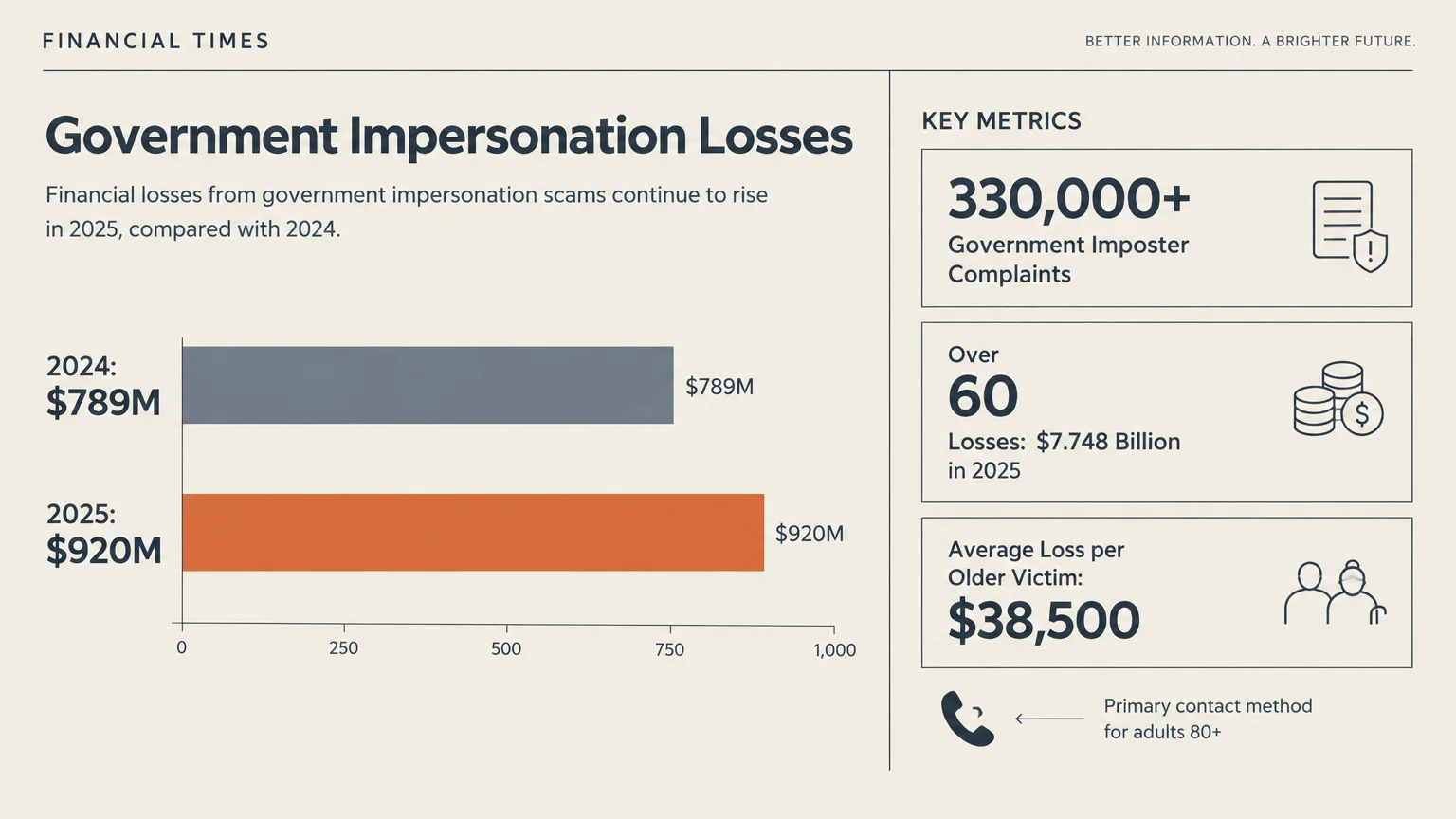
Within that staggering total, losses specifically attributed to government impersonators surged to $920 million in 2025, up from $789 million in 2024.
The FTC logged over 330,000 complaints involving government imposters; the SSA ranked among the most frequently impersonated agencies in the nation.
The FBI Internet Crime Complaint Center (IC3) reported that Americans aged 60 and older lost $7.748 billion to fraud in 2025, representing a 59% annual spike.
The average loss among older victims was $38,500 per complaint. Older adults surrendered $413 million specifically to government impersonation schemes.
While online contact methods cause substantial financial damage overall, the FTC confirmed that telephone calls remain the primary contact method for scam losses among adults aged 80 and older.
Retirees often rely heavily on their monthly benefit checks to cover essential living expenses. Criminals recognize this vulnerability and tailor high-pressure scripts designed to induce compliance.
The SSA “Four Ps” Framework: How Fraudsters Operate
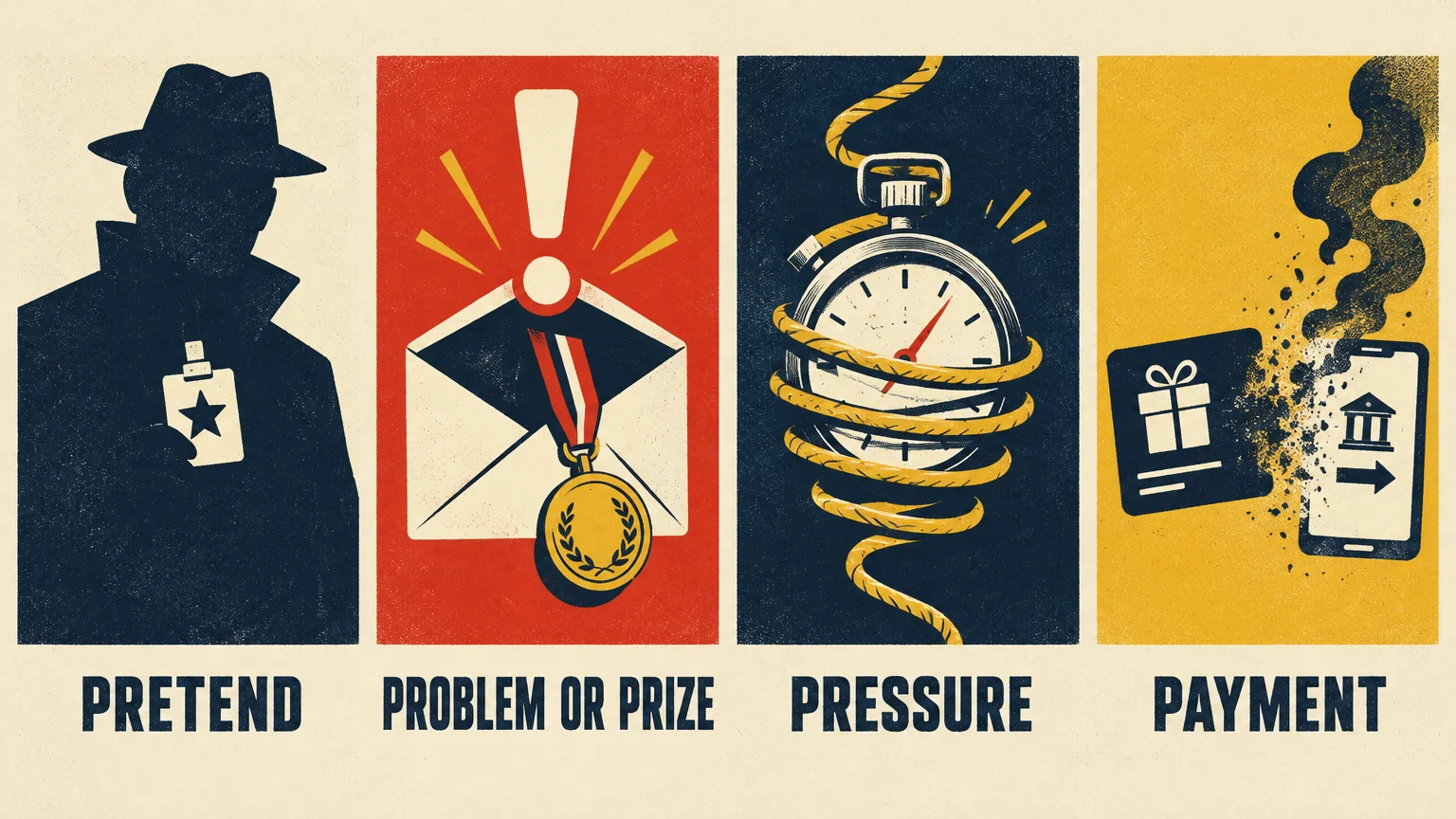
To help seniors detect criminal outreach, the SSA Office of the Inspector General (OIG) emphasizes the “Four Ps” framework. These four elements appear in virtually every Social Security telephone scam.
- Pretend: Scammers pretend to represent the Social Security Administration, the OIG, or another trusted government office.
- Problem or Prize: Imposters claim your identity is tied to serious criminal activity, or they promise an unexpected benefit bonus.
- Pressure: Callers demand that you take immediate action and order you not to discuss the call with family or financial institutions.
- Payment: Fraudsters demand that you transfer funds immediately using unusual, untraceable methods.
If an unsolicited caller presents any combination of these four tactics, hang up immediately. Recognizing this psychological playbook stops the theft before it begins.
“Scammers rely on panic to bypass your intellect; never let anyone rush you into transferring your money or giving up personal data.” — Suze Orman, Personal Finance Author & Educator
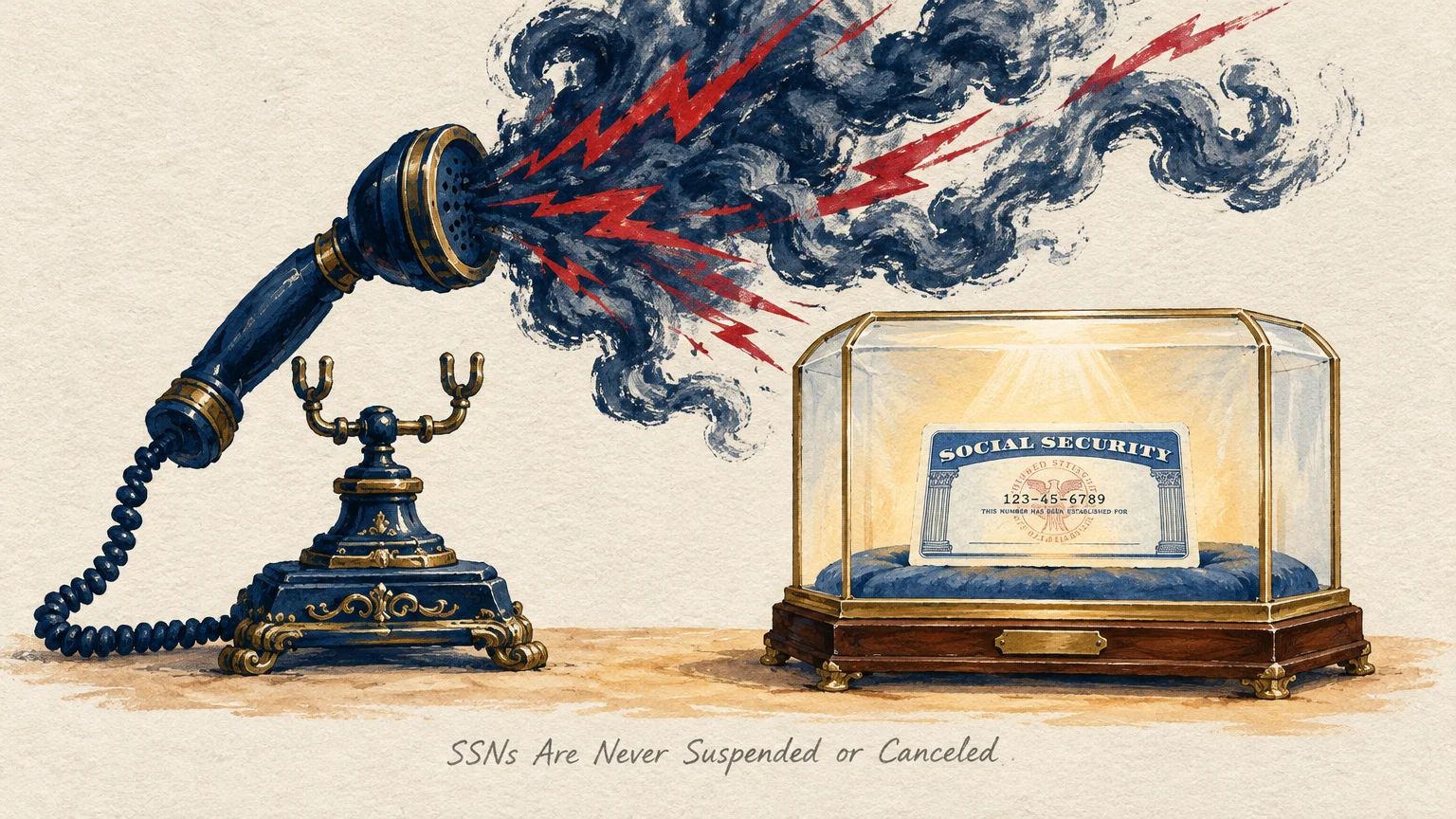
Sign 1: Threatening Immediate Arrest, Lawsuits, or SSN Suspension
The caller claims that law enforcement warrants exist in your name because someone used your Social Security number in serious crimes. They often threaten that local police will arrive at your home within the hour.
The caller may claim your Social Security number has been suspended, frozen, or canceled due to suspicious activity. This statement is entirely false.
The federal government never suspends, blocks, or revokes a Social Security number. Once issued, your number remains yours for life.
Legitimate SSA employees do not threaten citizens with arrest, asset seizure, or deportation over the phone. If a caller uses aggressive legal threats, you are dealing with a criminal imposter.
Scammers create synthetic panic to shut down your critical thinking. Real federal agencies follow strict, formal legal procedures rather than shouting through telephone receivers.
Sign 2: Demanding Payment via Gift Cards, QR Codes, Crypto, or Cash Couriers
A legitimate government agency will never demand that you resolve a debt or verify your identity using retail gift cards, wire transfers, or cryptocurrency kiosks.
On September 28, 2026, the SSA OIG issued an urgent public warning regarding an evolving payment tactic: QR code and barcode scams.
Imposters now text or email barcodes directly to victims during the call. They direct retirees to visit local retail stores and instruct cashiers to scan the code to load physical cash.
Recent federal warnings also highlight scammers demanding payments in gold bars, physical silver, or cash handed directly to an in-person courier at your residence.
Fraudsters frame these extreme payment demands as protective measures to shield your retirement funds from seizure. The SSA never asks citizens to withdraw cash or buy precious metals.
If any caller requests payment through unconventional channels, disconnect immediately. Once cash, cryptocurrency, or gift card codes leave your possession, recovery becomes virtually impossible.
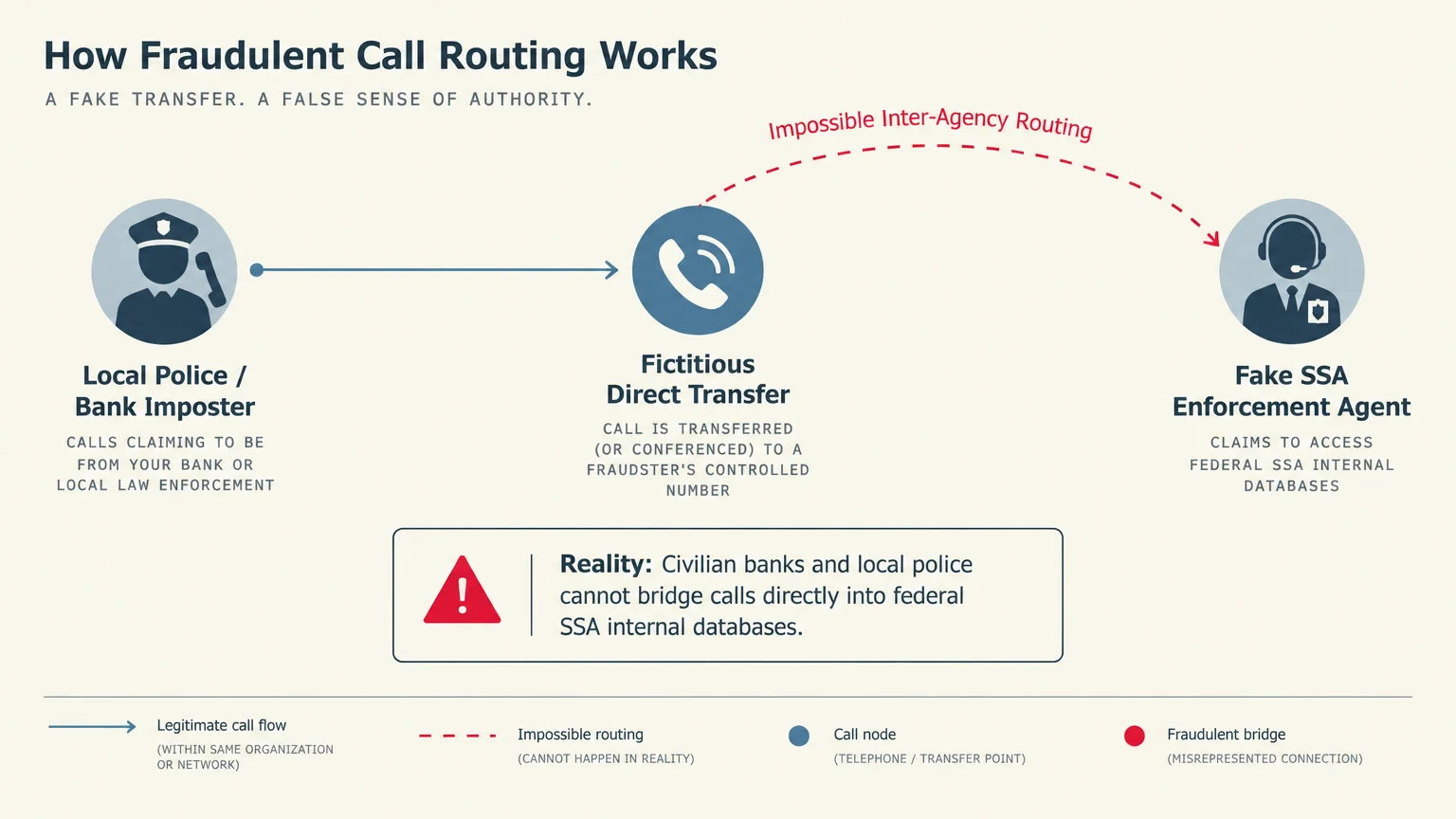
Sign 3: The Call Arrives via a “Transfer” from a Bank or Police Agency
A convincing variation of this fraud involves multi-step incoming calls. On July 29, 2026, the SSA OIG issued an alert exposing these coordinated call transfer schemes.
The interaction typically starts with an individual claiming to represent your bank, a major online retailer, or local law enforcement. They claim your account suffered a fraudulent charge.
To resolve the supposed crisis, the initial caller claims they will patch you straight through to an official SSA investigator or federal agent.
Remember this essential verification rule: legitimate commercial banks, retail fraud departments, and local police departments cannot transfer incoming phone calls directly to the SSA or the OIG.
If someone transfers you to an alleged government investigator during a customer service dispute, the call is entirely fraudulent. Hang up the phone immediately.
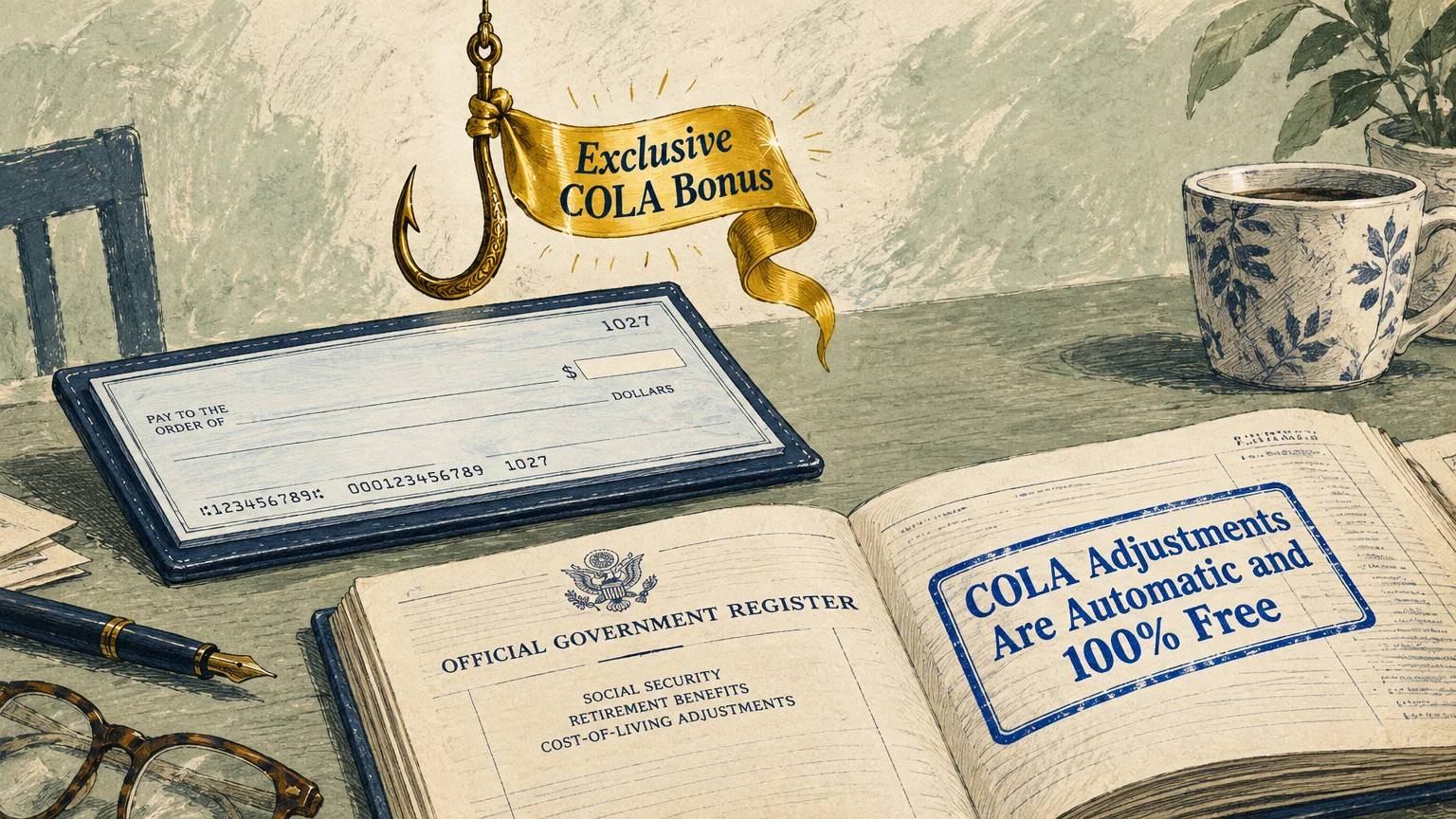
Sign 4: Dangling an Exclusive COLA Increase or Charging a COLA Processing Fee
Scammers consistently exploit seasonal Social Security announcements to steal banking information. The annual Cost-of-Living Adjustment (COLA) represents prime bait for impersonators.
On October 14, 2026, the SSA announced a 3.6% COLA for 2027, increasing the average retired worker’s monthly benefit by approximately $75 beginning in January 2027.
Following this announcement, scammers began dialing seniors to claim they must verify personal banking information to unlock their 2027 benefit boost.
Some imposters even demand a processing fee to ensure the higher payment arrives on schedule. These assertions are completely fraudulent.
Annual COLA adjustments apply automatically to your monthly payment. The SSA never contacts beneficiaries to verify details or collect administrative fees for a standard adjustment.
Beneficiaries who opted into paperless notifications through their Social Security Administration account can view their official notice securely online; all others receive formal letters by mail.

Sign 5: Forcing Extreme Secrecy and Rushing You Off the Phone
A fake SSA caller will demand that you keep the entire conversation confidential. They will insist that federal nondisclosure rules prevent you from speaking with family members or bank tellers.
Imposters deliberately order victims to stay on the line while driving to retail outlets, banks, or cryptocurrency kiosks. They coach victims to lie to tellers about withdrawal reasons.
Criminals enforce this extreme isolation because third-party intervention destroys their scheme. An attentive relative or bank teller can quickly identify the interaction as fraud.
Legitimate federal employees encourage you to review documentation carefully. They never forbid you from speaking to trusted advisers, spouses, or financial institutions.
Whenever an unsolicited caller insists on total secrecy or manufactures an artificial deadline, treat the interaction as an attack on your financial security.
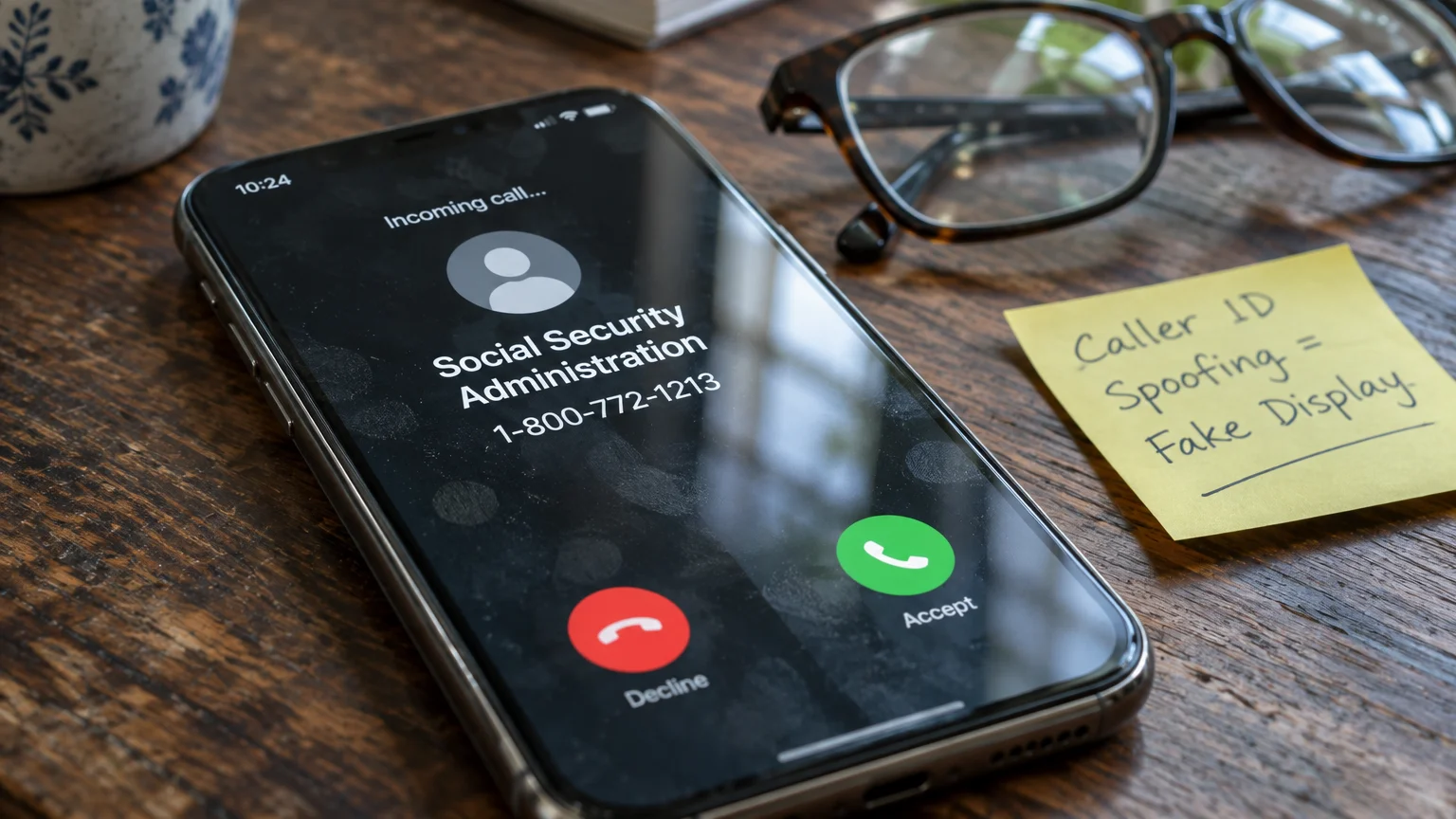
Sign 6: Falsified Caller ID Showing the Official SSA Number
Your telephone screen may display the official SSA toll-free number (1-800-772-1213) or the name of a local federal office. Do not trust this display.
Modern internet calling services allow cybercriminals to spoof any telephone number they desire with minimal technical effort.
Scammers intentionally spoof official government phone numbers to lower your guard. Relying on caller identification data leaves you highly vulnerable to deception.
If an unexpected caller claims to represent the SSA, assume the displayed caller ID is manipulated. End the call regardless of what appears on your phone screen.
You can verify authentic agency business only by placing an outgoing call directly through officially verified telephone numbers.
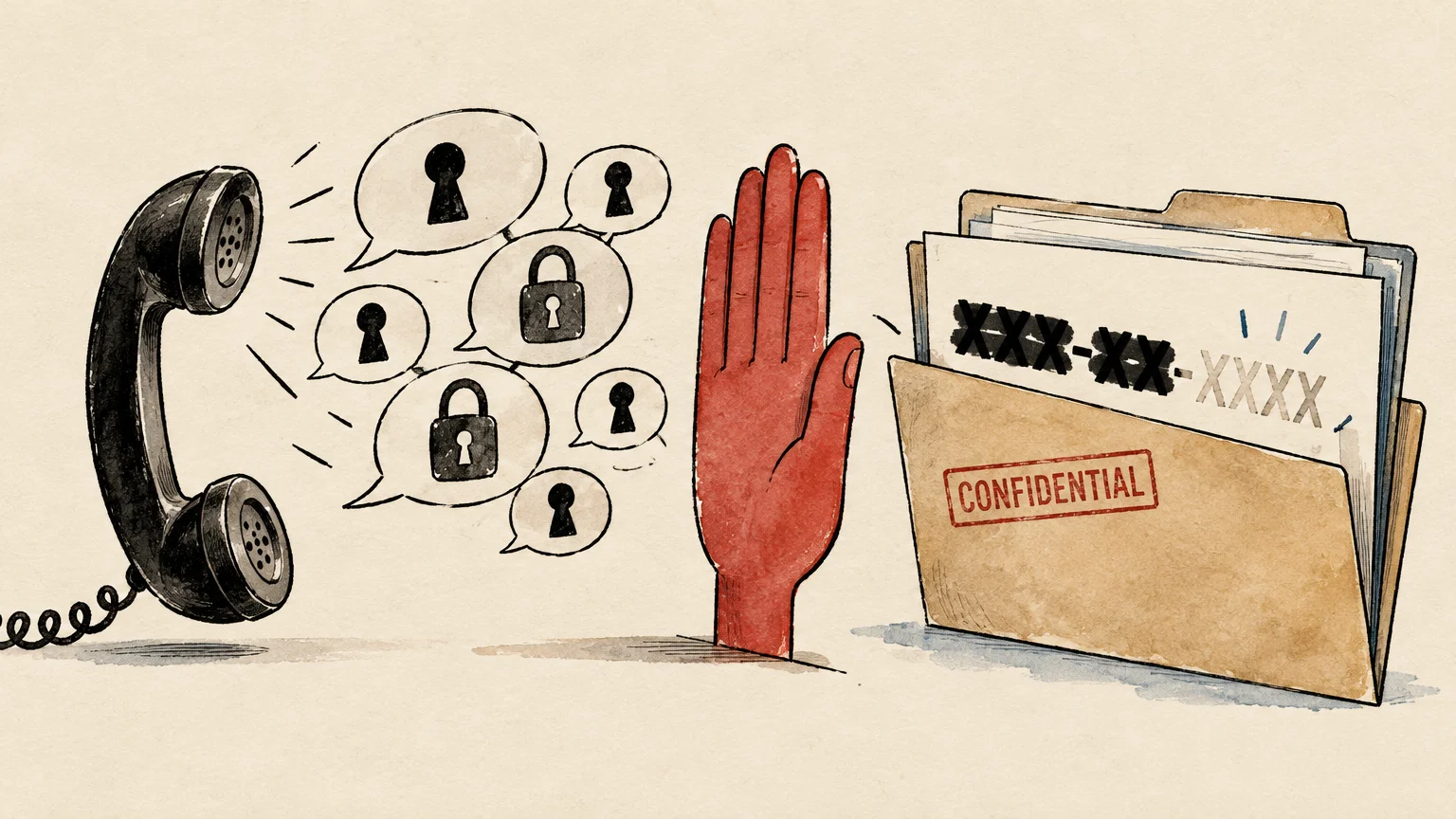
Sign 7: Demanding You Recite Your Full SSN or Bank Account Numbers
Fraudulent callers frequently begin conversations by asking you to confirm your full nine-digit Social Security number, birthdate, or mother’s maiden name.
They may also demand your complete checking account and bank routing numbers under the guise of confirming direct deposit details.
While an authentic SSA representative may ask you to verify identity elements during an outreach you initiated, they already have your records on file.
An SSA employee who initiates contact will never demand that you disclose your entire Social Security number or financial credentials out of nowhere.
Never read sensitive credentials to an incoming caller. Safely store this critical data and review official guidance through the Consumer Financial Protection Bureau to protect your accounts.
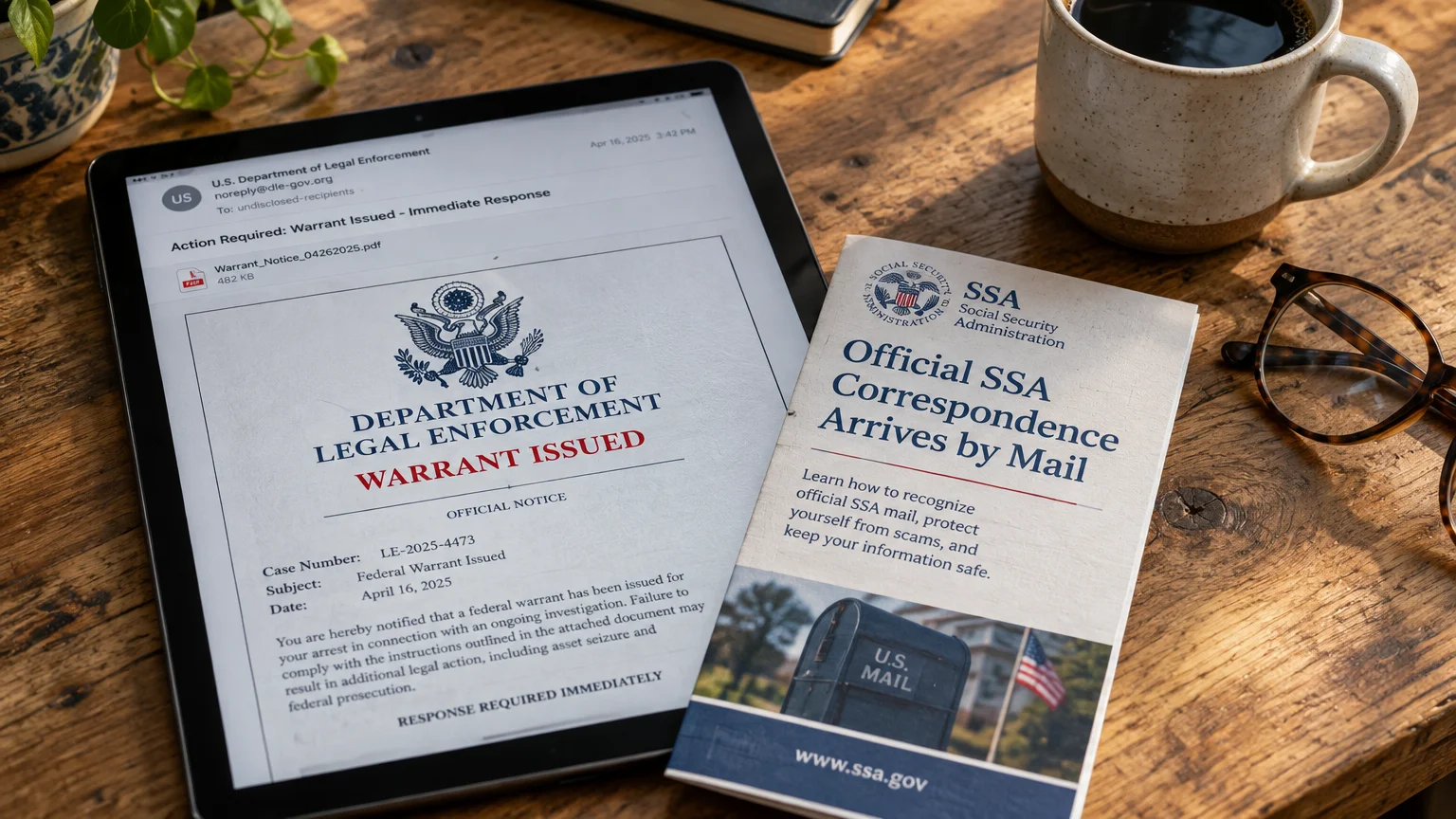
Sign 8: Presenting “Official” Badges or Legal Letters via Text or Email
To establish credibility, imposter callers often send digital credentials while keeping you on the telephone. They transmit photos of fabricated badges, credentials, or agency seals.
Imposters may send falsified letters bearing the official SSA or OIG letterhead, complete with forged signatures of real federal administrators.
Federal agencies do not send digital photos of law enforcement badges or warrants through standard text messages, messaging apps, or public email platforms.
Scammers pull agency seals and executive names directly from public websites to construct deceptive materials. High-resolution imagery does not prove authenticity.
Dismiss any text message or email containing government badges or warrants as fraudulent evidence designed to manipulate your emotions.
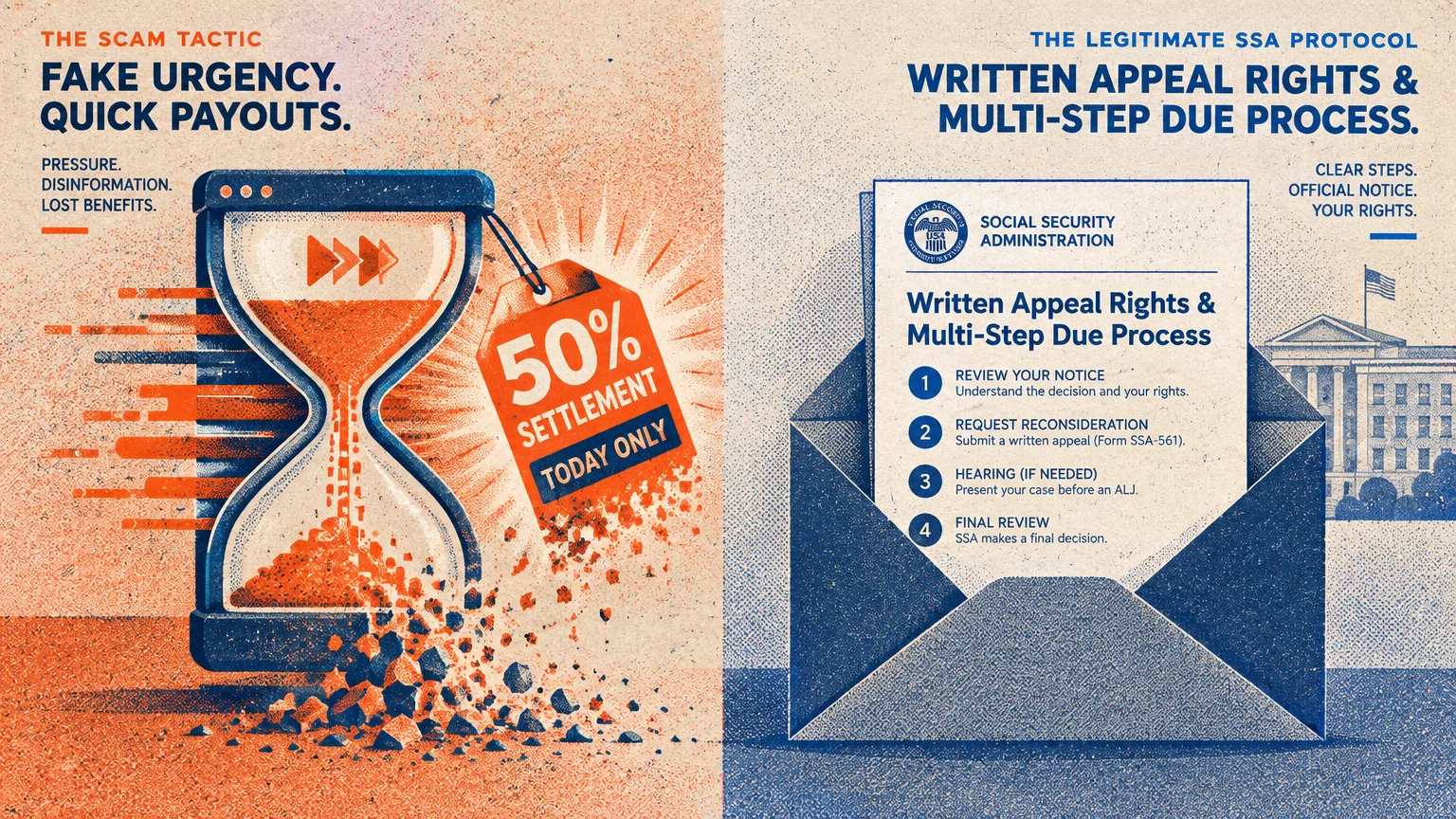
Sign 9: Offering an Instant Settlement for Benefit Overpayments or Back Taxes
The caller may inform you that an administrative audit revealed an overpayment of past benefits or delinquent federal tax obligations.
They promise that you can eliminate thousands of dollars in debt or avoid prosecution by paying a discounted sum immediately over the phone.
When authentic benefit overpayments happen, the SSA follows strict administrative rules. They send comprehensive written notifications detailing the exact calculation, your balance, and dispute procedures.
The agency grants clear formal appeal rights and allows beneficiaries to request waivers or establish manageable monthly repayment plans.
The SSA never negotiates instant telephone settlements requiring immediate funds transfer. Any offer to settle federal debt instantly over the phone is an outright fabrication.
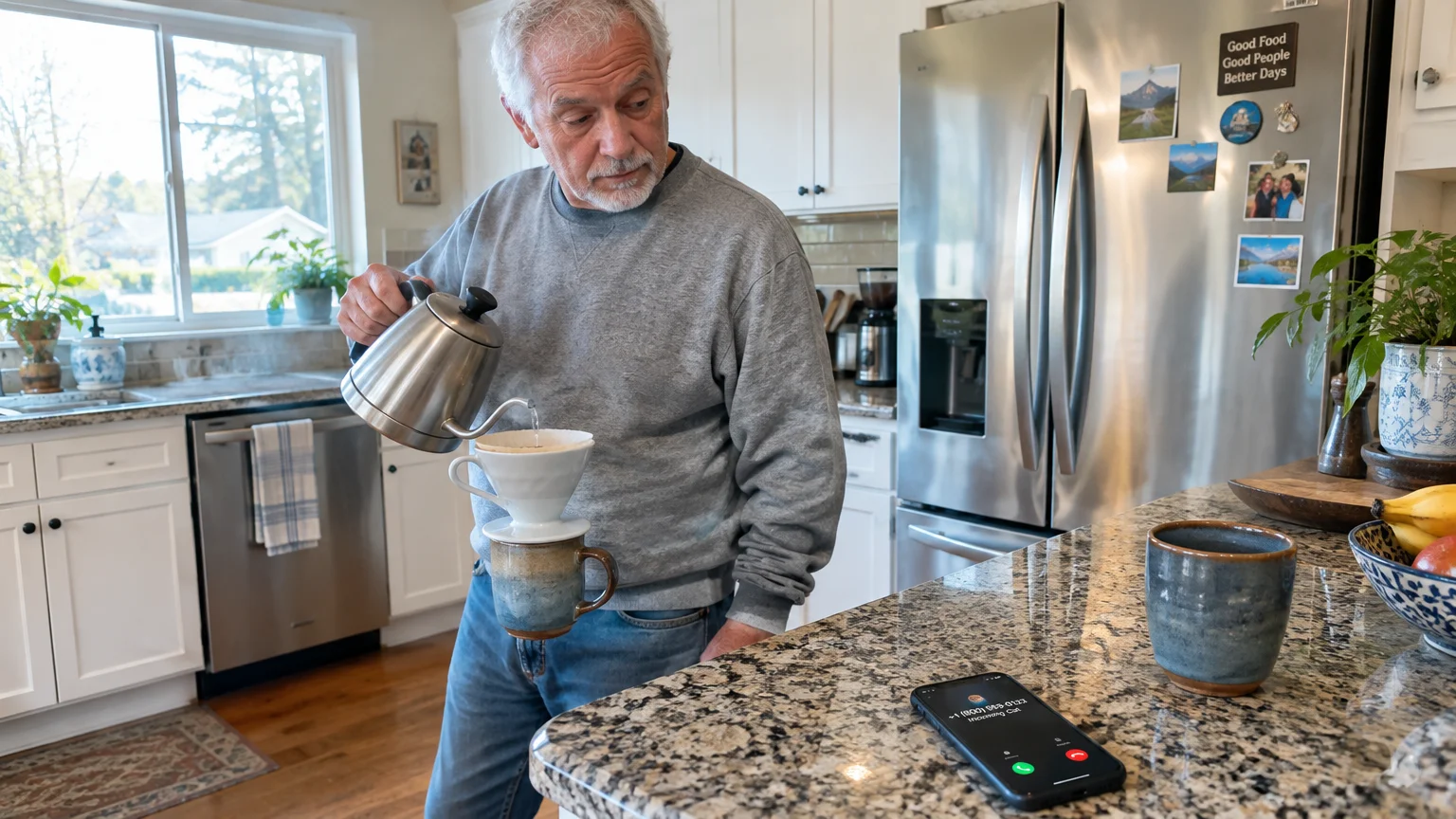
Sign 10: Initiating Unsolicited Contact When You Have No Pending Business
Authentic SSA representatives rarely place unannounced telephone calls to private citizens. The agency conducts nearly all official business via standard United States mail.
An official SSA employee may occasionally call you, but almost exclusively under specific, traceable circumstances.
Legitimate calls occur if you recently submitted an application for retirement benefits, requested an appointment, or asked a representative to call you back.
If you receive a cold call from someone claiming to represent the SSA and you have no open claims or scheduled consultations, treat it as a threat.
Hanging up on an unprompted caller will never compromise your earned retirement benefits or result in penalties.
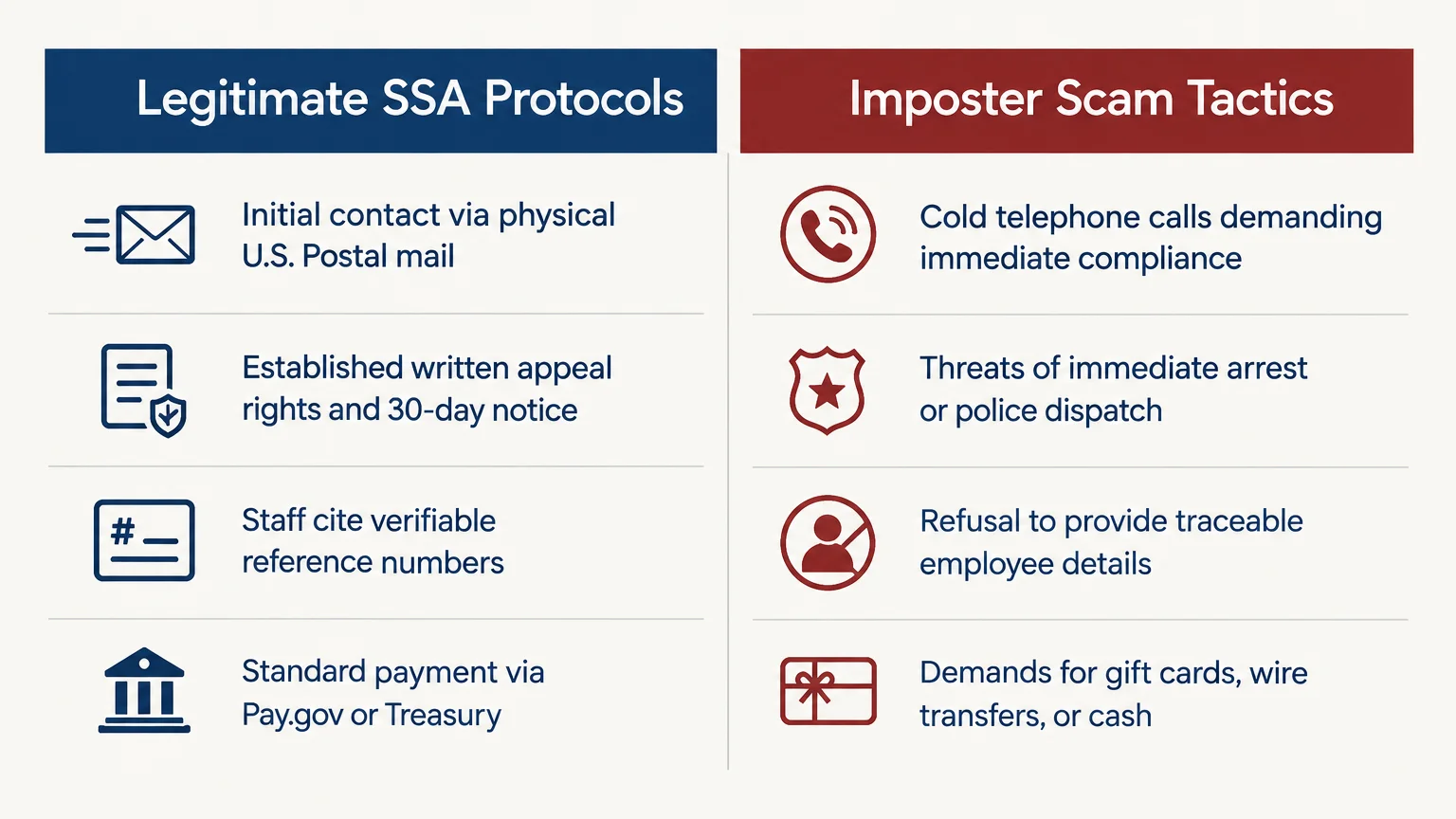
Legitimate SSA Outreach vs. Imposter Tactics: A Side-by-Side Comparison
Understanding the stark differences between genuine SSA administration procedures and scammer operations helps you make split-second decisions when the telephone rings.
| Interaction Feature | Legitimate SSA Representative | Imposter / Fake Caller |
|---|---|---|
| Primary Contact Method | First-class United States mail sent to your home address. | Unsolicited, high-pressure telephone calls, texts, or recorded messages. |
| Status of Your SSN | SSNs are permanent; the agency never suspends or cancels numbers. | Falsely claims your number is suspended or tied to international crime. |
| Accepted Payment Methods | Standard treasury channels, online portal, or checks mailed to official offices. | Gift cards, cryptocurrency, barcodes, QR codes, gold bars, or cash couriers. |
| Call Transfers | Never accepts live transfers from private banks, retailers, or police. | Transfers victims between fake bank managers and fake federal agents. |
| Urgency and Tone | Professional, courteous, and provides formal written appeal rights. | Aggressive, hostile, threatening immediate arrest, and demanding total secrecy. |
| Cost-of-Living Adjustment | Applies COLA automatically without fees, forms, or phone confirmation. | Demands personal verification or charges a processing fee to release funds. |

Common Mistakes to Avoid When Handling Suspicious Calls
Even cautious retirees occasionally make mistakes when confrontational callers catch them off guard. Avoiding these common errors prevents significant financial harm.
- Trusting the Caller ID: Never rely on incoming caller ID information to establish credibility. Scammers spoof numbers effortlessly.
- Pressing Numbers to Opt Out: Robocalls often say “press 1 to speak with an investigator” or “press 2 to be removed from this list.” Pressing buttons confirms your number is active, resulting in more spam calls.
- Arguing or Trying to Bait the Scammer: Engaging in long conversations with fraudsters exposes you to sophisticated psychological profiling. Hang up immediately without debate.
- Concealing the Incident Out of Embarrassment: If you provided personal information, notify your family and financial institutions right away. Silence only grants criminals time to exploit your accounts.
- Neglecting to Monitor Credit Files: Failing to place credit freezes after a suspected breach gives identity thieves free rein to open accounts in your name.
Developing disciplined phone habits provides the strongest defense against financial exploitation. Hang up, take a breath, and evaluate the situation calmly.
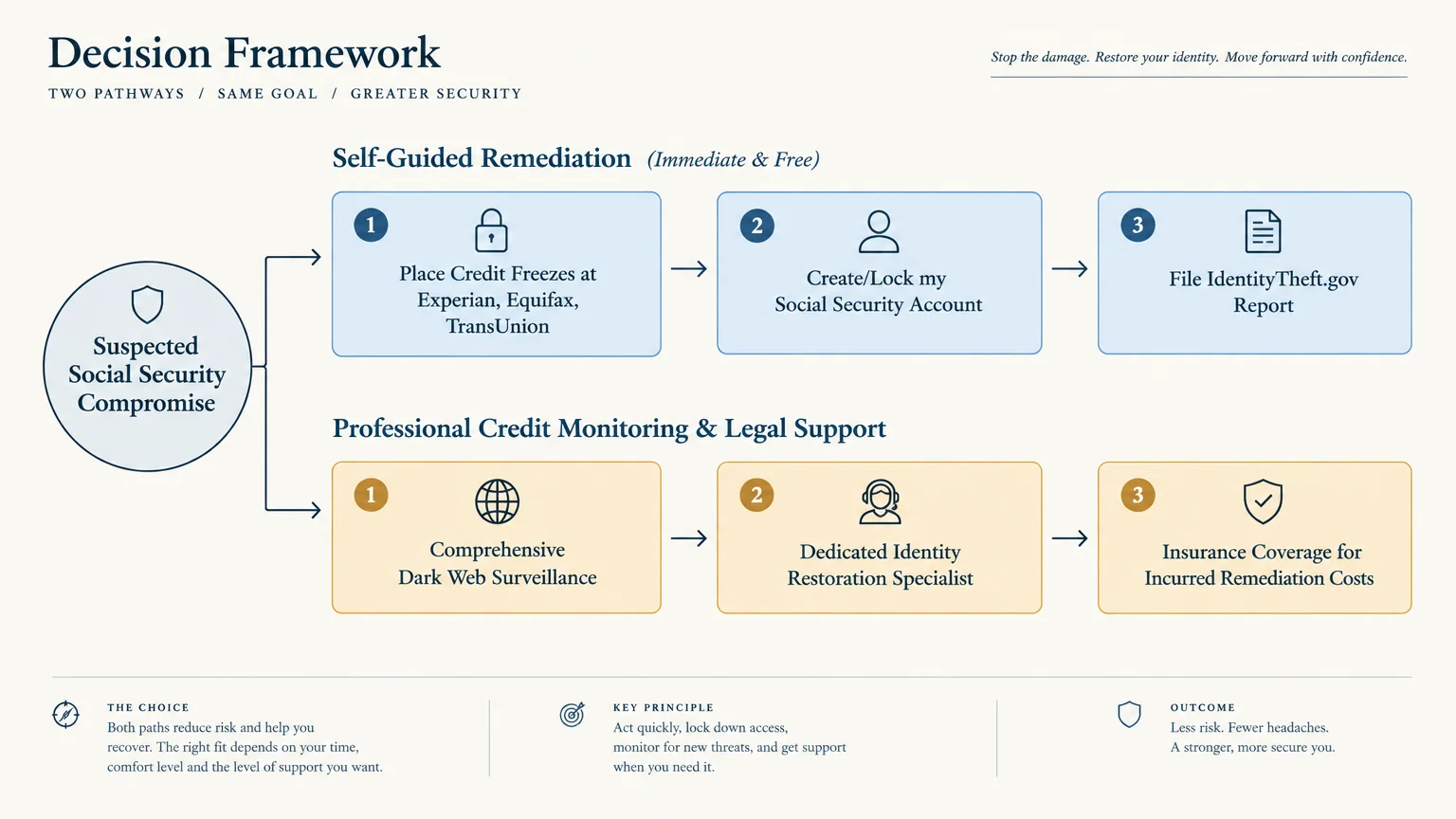
Professional vs. Self-Guided: Managing a Potential Compromise
The steps you take following a suspicious phone call depend on how much information you revealed during the interaction. Assess your situation using these standard scenarios.
Scenario 1: You Terminated the Call Without Sharing Information
If you hung up immediately, your exposure remains low. You do not need to hire professional identity restoration services.
Block the caller’s number on your mobile device or landline service. Report the encounter directly to the SSA OIG scam reporting portal to aid federal enforcement.
Scenario 2: You Disclosed Your Social Security Number or Date of Birth
Sharing your core personal details requires immediate, self-guided protective action. Contact the three major credit bureaus (Equifax, Experian, and TransUnion) to freeze your credit files.
Create or log into your personal account at the official Social Security portal to verify your direct deposit preferences and contact records remain unchanged.
Scenario 3: You Shared Banking Credentials or Transferred Funds
If you sent funds or shared account details, you require immediate professional intervention. Contact your bank fraud division immediately to freeze compromised accounts and reverse pending transactions.
File an official police report with your local municipal department. You will need this documentation when submitting fraud disputes and working with credit agencies.
Scenario 4: Sophisticated, Widespread Identity Theft Occurred
When criminals open unauthorized credit accounts or divert your retirement deposits, navigating recovery alone becomes overwhelming. Consider hiring an accredited identity restoration specialist or legal professional.
Register an identity theft affidavit with the Federal Trade Commission through IdentityTheft.gov, which creates a personalized administrative recovery plan.
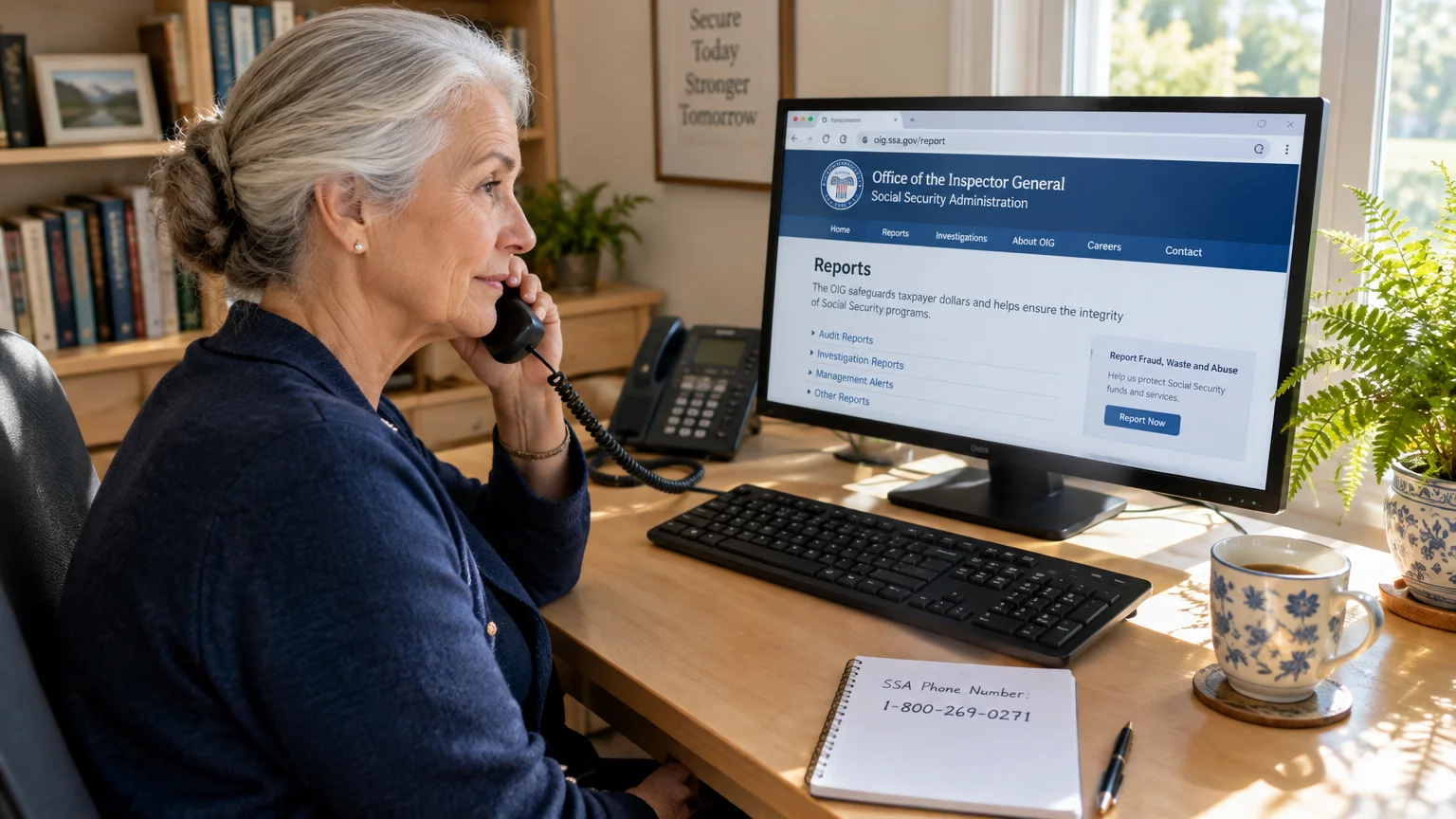
How to Verify an SSA Call and Report Fraud
If you receive a phone call from an individual claiming to represent the SSA and you feel unsure of its legitimacy, hang up. Never use telephone numbers provided by the caller.
To verify authentic agency business, call the official Social Security customer service line directly at 1-800-772-1213 (TTY 1-800-325-0778), available Monday through Friday.
You can also log into your secure account at ssa.gov/myaccount to review the Message Center for formal agency alerts or benefit adjustment notices.
Every year, the SSA and the OIG observe National Slam the Scam Day, held on March 5, 2026, to educate the public on combating telephone fraud.
If you encountered an imposter, report the incident immediately through the official online reporting portal at oig.ssa.gov/report.
Alternatively, call the SSA Fraud Hotline directly at 1-800-269-0271 (TTY 1-866-501-2101). The hotline operates Monday through Friday between 10:00 a.m. and 2:00 p.m. Eastern Time.
For independent community support and fraud prevention resources, explore educational tools offered through the AARP Fraud Watch Network.
Frequently Asked Questions About Social Security Calls
Can the Social Security Administration actually suspend your Social Security number?
No. The federal government never suspends, freezes, cancels, or revokes a Social Security number under any circumstances.
Any caller who claims your number is suspended or tied to criminal activity is an imposter attempting to steal your funds.
Does Social Security ever call beneficiaries directly?
Yes, but under very limited circumstances. An authentic representative may call if you have ongoing business, requested an appointment, or applied for benefits.
However, genuine agency employees will never demand immediate payment, threaten you with arrest, or ask for gift cards.
What should I do if a caller threatens that police are coming to arrest me?
Hang up the phone immediately. The SSA does not deploy local police officers to arrest citizens over missed calls or unverified debts.
Scammers use dramatic law enforcement threats to induce panic. Terminating the call neutralizes their leverage entirely.
How do I know if my annual COLA adjustment notice is genuine?
Official COLA adjustments occur automatically without administrative fees or identity confirmation phone calls.
You can view your verified notice securely inside your official online account or wait for your formal paper letter delivered by mail.
Safeguarding Your Hard-Earned Retirement
Your retirement benefits represent decades of steady dedication and hard work. Criminal syndicates deploy sophisticated deception, but they cannot force you to comply.
Cultivate a healthy skepticism toward unexpected incoming calls. When doubt arises, hang up, look up the verified agency number yourself, and confirm the facts on your own terms.
The information in this guide is meant for educational purposes. Your specific circumstances—including income, savings, health coverage, and goals—may require different approaches. When in doubt, consult a licensed professional.
Last updated: October 2026. Retirement benefits, tax laws, and healthcare costs change frequently—verify current details with official sources.