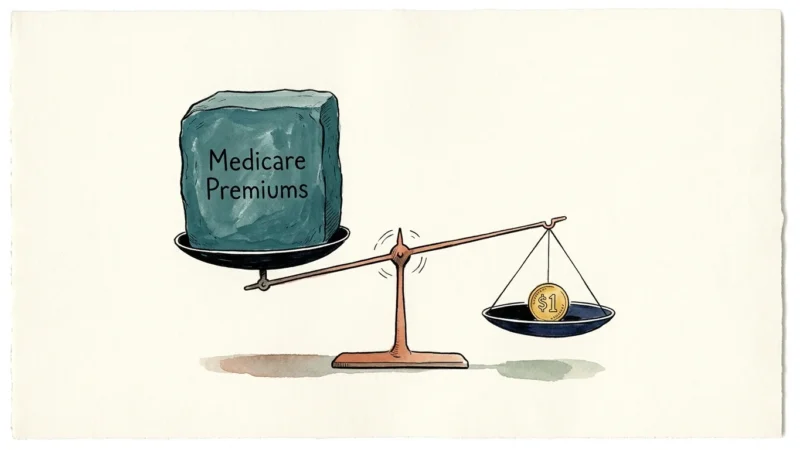
Converting your life savings into a reliable monthly paycheck requires a coordinated, multi-source strategy. You can maintain financial independence throughout retirement by combining guaranteed benefits, market-based investments, and tax-efficient withdrawal accounts.
A balanced plan protects your living standards against inflation while preserving your principal. It also shields your family from unexpected tax bills and market downturns.
Relying on a single revenue stream creates unnecessary financial vulnerability during volatile economic periods. Here are ten proven ways to generate sustainable retirement income for your future.
Building a Multi-Layered Retirement Income Strategy
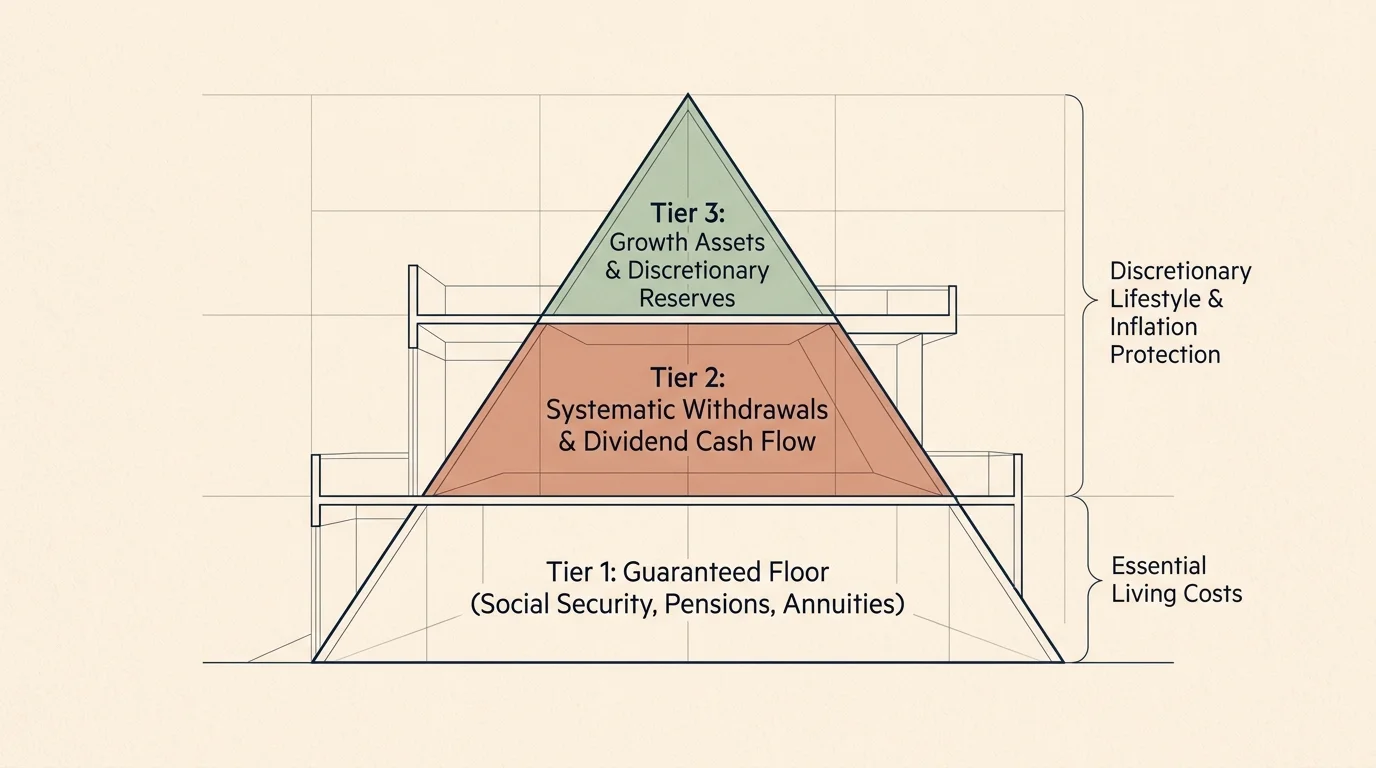
Relying on a single revenue stream leaves you exposed to inflation, market volatility, and tax policy changes. A resilient retirement strategy blends guaranteed income floors with growth assets.
Structuring your cash flow across different tiers gives you the confidence to cover essential living costs while enjoying discretionary spending.

1. Optimize Your Social Security Timing
Social Security forms the bedrock of guaranteed income for most American retirees. The average monthly benefit for a retired worker is approximately $2,084, according to the Social Security Administration.
Your Full Retirement Age (FRA) is 67 if you were born in 1960 or later. Claiming before your FRA permanently reduces your monthly check.
Delaying benefits until age 70 increases your payout by 8% per year through delayed retirement credits. This delay can increase the maximum monthly benefit to $5,181 compared to $4,152 at FRA.
If you claim before FRA while working, earnings over $24,480 temporarily trigger benefit withholdings. Weigh your health, longevity expectations, and spousal needs before filing.
2. Build a Systematic Portfolio Withdrawal Strategy
Systematic portfolio withdrawals turn your investment nest egg into a recurring paycheck. Bill Bengen’s classic 4% rule historically provided a standard baseline for 30-year retirements.
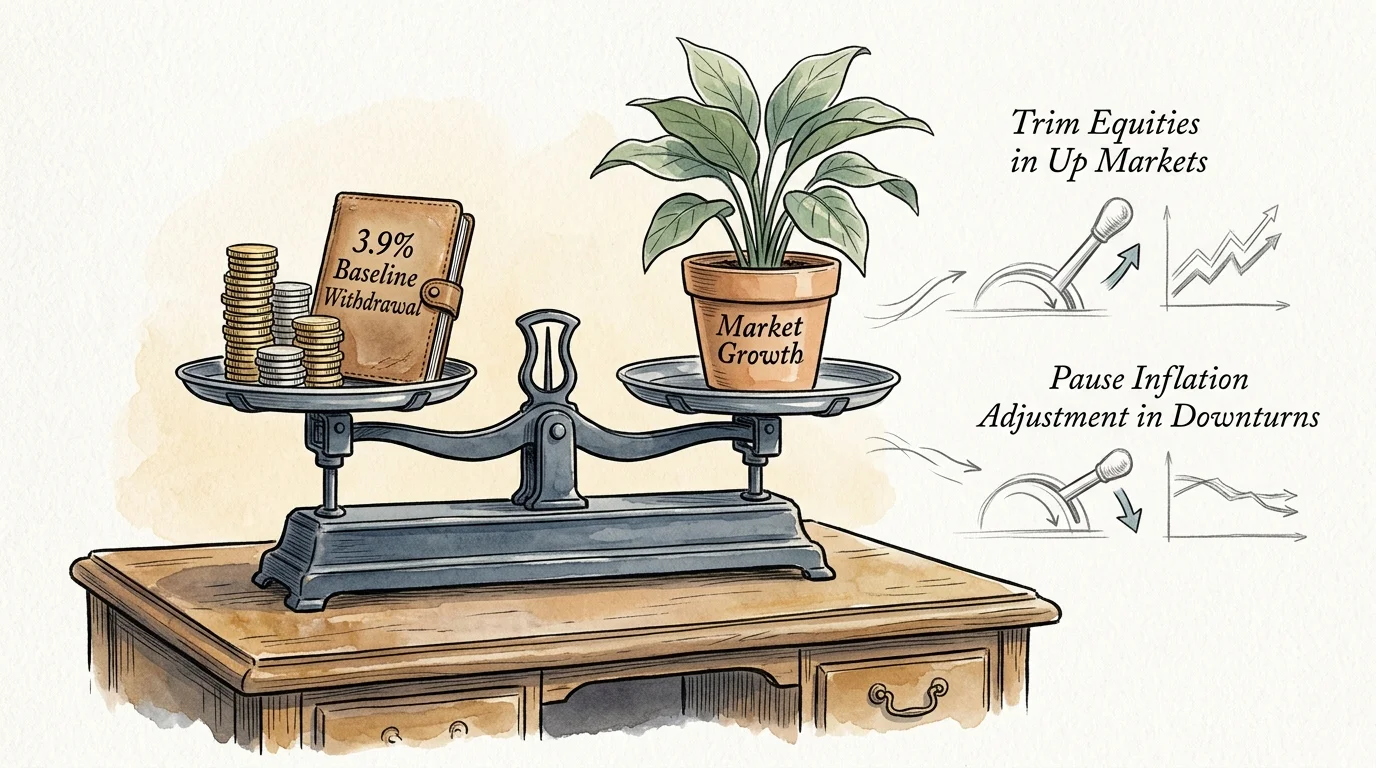
Recent research from Morningstar suggests a starting baseline withdrawal rate of 3.9% for a balanced portfolio. Dynamic spending rules allow you to adjust withdrawals based on market performance.
Trimming equities after strong market years replenishes your cash reserves. Conversely, pausing inflation adjustments during market downturns prevents premature portfolio depletion.
3. Generate Cash Flow with Dividend-Growth Stocks and Funds
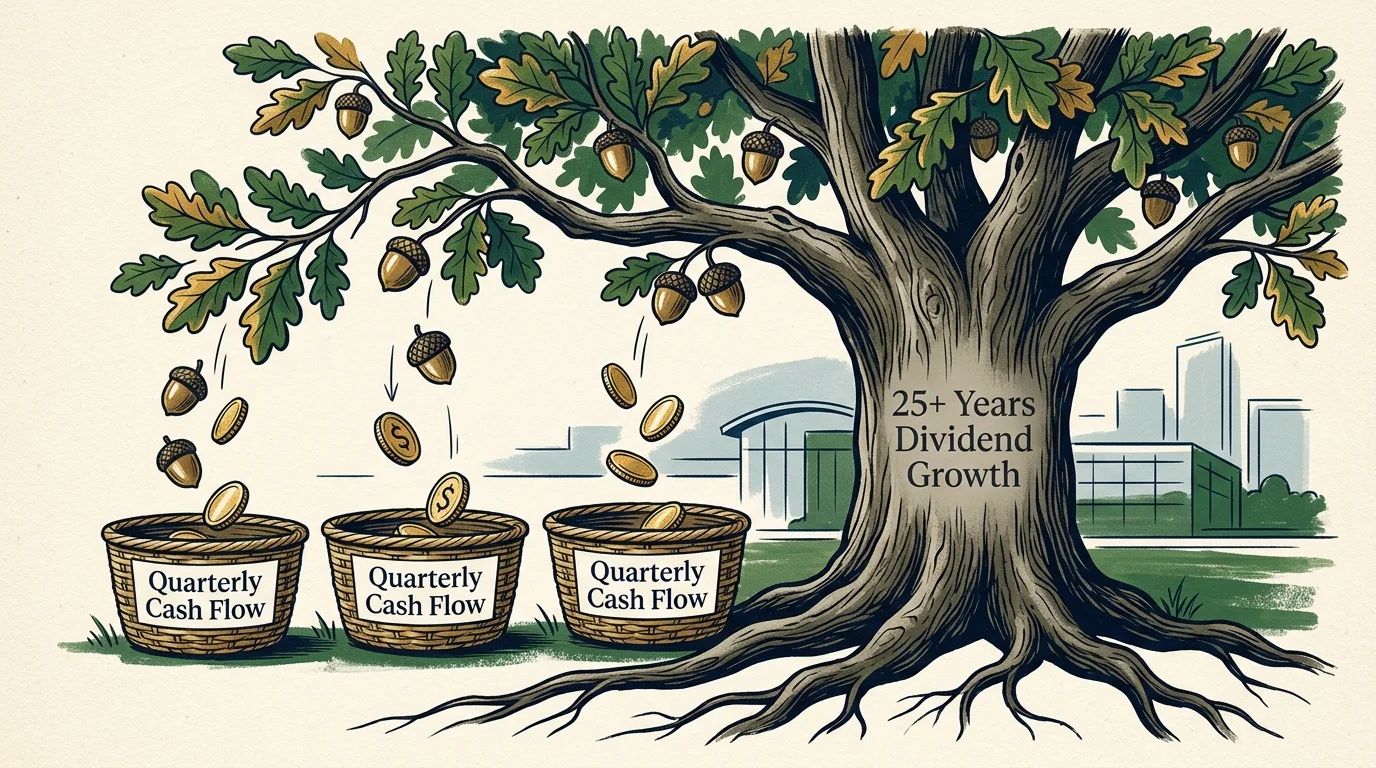
Dividend-paying stocks distribute a portion of corporate profits directly to shareholders as cash. Dividend aristocrats—companies that have raised payouts for 25 consecutive years—offer steady income growth.
Broad dividend exchange-traded funds (ETFs) allow you to collect quarterly income without selling underlying shares. This structure helps preserve your invested capital over long horizons.
“The real risk is not short-term volatility, but the permanent loss of capital and purchasing power.” — John Bogle, Founder of Vanguard
Qualified dividends receive preferential long-term capital gains tax rates. This favorable tax treatment keeps more net income in your pocket each year.

4. Construct a Bond or CD Ladder for Reliable Cash Flow
A laddering strategy spaces out the maturity dates of fixed-income instruments like Treasury bonds or Certificates of Deposit (CDs). This structure produces predictable income at regular intervals.
As each bond or CD matures, you can spend the principal or reinvest into a new tranche. This approach protects you from locking all your cash into unfavorable interest rates.
You can easily purchase U.S. Treasury securities commission-free through government portals or brokerage platforms like Investor.gov. Backed by the government, they carry virtually zero default risk.
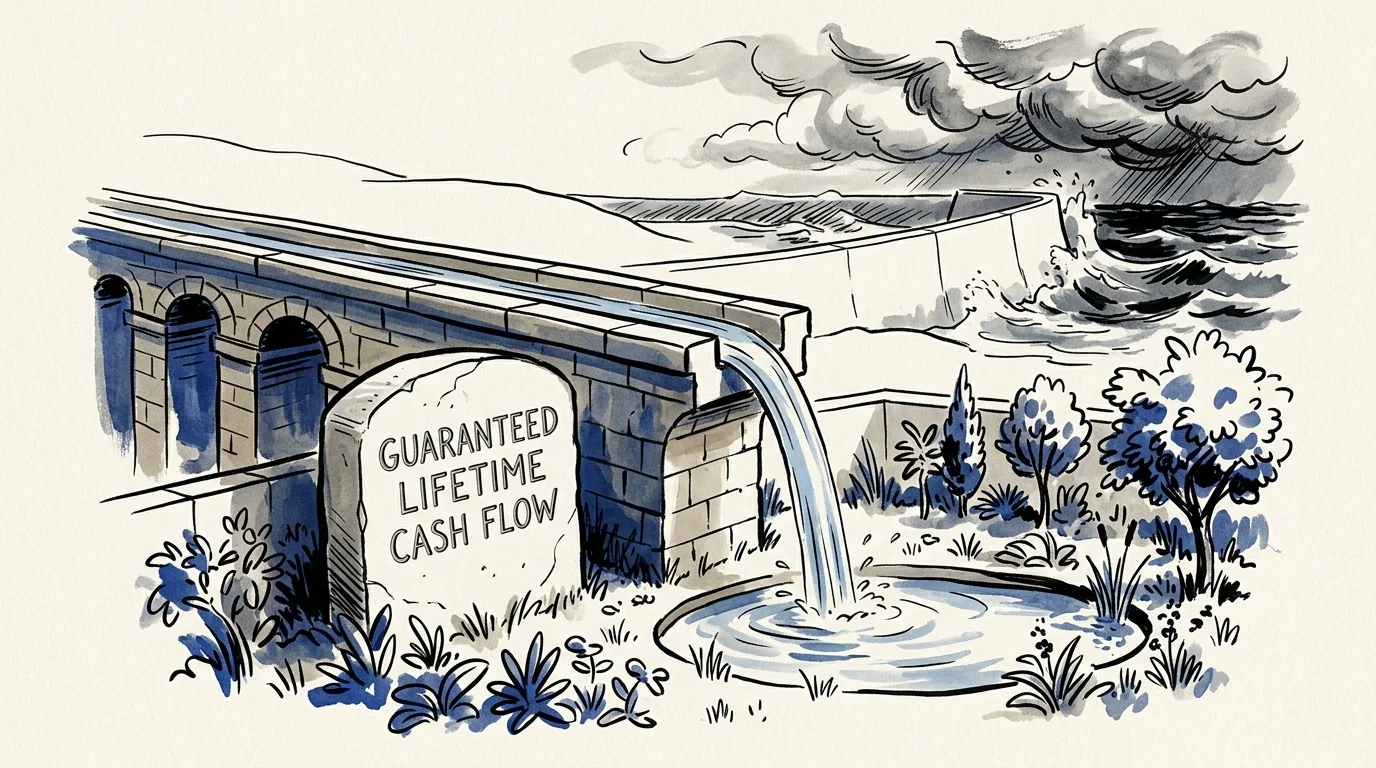
5. Lock in Guaranteed Lifetime Cash Flow with Annuities
Single Premium Immediate Annuities (SPIAs) convert a lump sum of savings into guaranteed monthly lifetime payments. They function much like a self-funded private pension.
Recent federal rules under the SECURE 2.0 Act make it easier for workplace retirement plans to offer lifetime annuity options. This allows seamless transitions from saving to spending.
Fixed indexed annuities offer principal protection with interest tied to a market index. However, be mindful of surrender charges and rider fees before committing funds.

6. Tap into Real Estate and REIT Distributions
Physical rental real estate produces ongoing monthly rental cash flow and long-term property appreciation. You also benefit from tax deductions such as depreciation, mortgage interest, and maintenance costs.
If you dislike direct landlord responsibilities, Real Estate Investment Trusts (REITs) trade on public stock exchanges. By law, REITs must distribute at least 90% of their taxable income to shareholders.
REIT dividends generally count as ordinary income rather than qualified dividends. Holding them inside tax-deferred accounts prevents unnecessary annual tax drag.

7. Manage Required Minimum Distributions (RMDs) Strategically
The Internal Revenue Service requires you to withdraw annual amounts from traditional IRAs and 401(k)s starting at age 73. This starting age will rise to 75 in 2033.
Failing to take your full RMD triggers a 25% excise tax penalty on the shortfall. The penalty drops to 10% if you correct the error within two years.
You can direct up to $108,000 annually via Qualified Charitable Distributions (QCDs) directly from your IRA to a charity. This fulfills your RMD without adding to taxable income.
“The biggest mistake retirees make is ignoring the tax time bomb ticking inside their traditional retirement accounts.” — Ed Slott, CPA and Retirement Distribution Expert
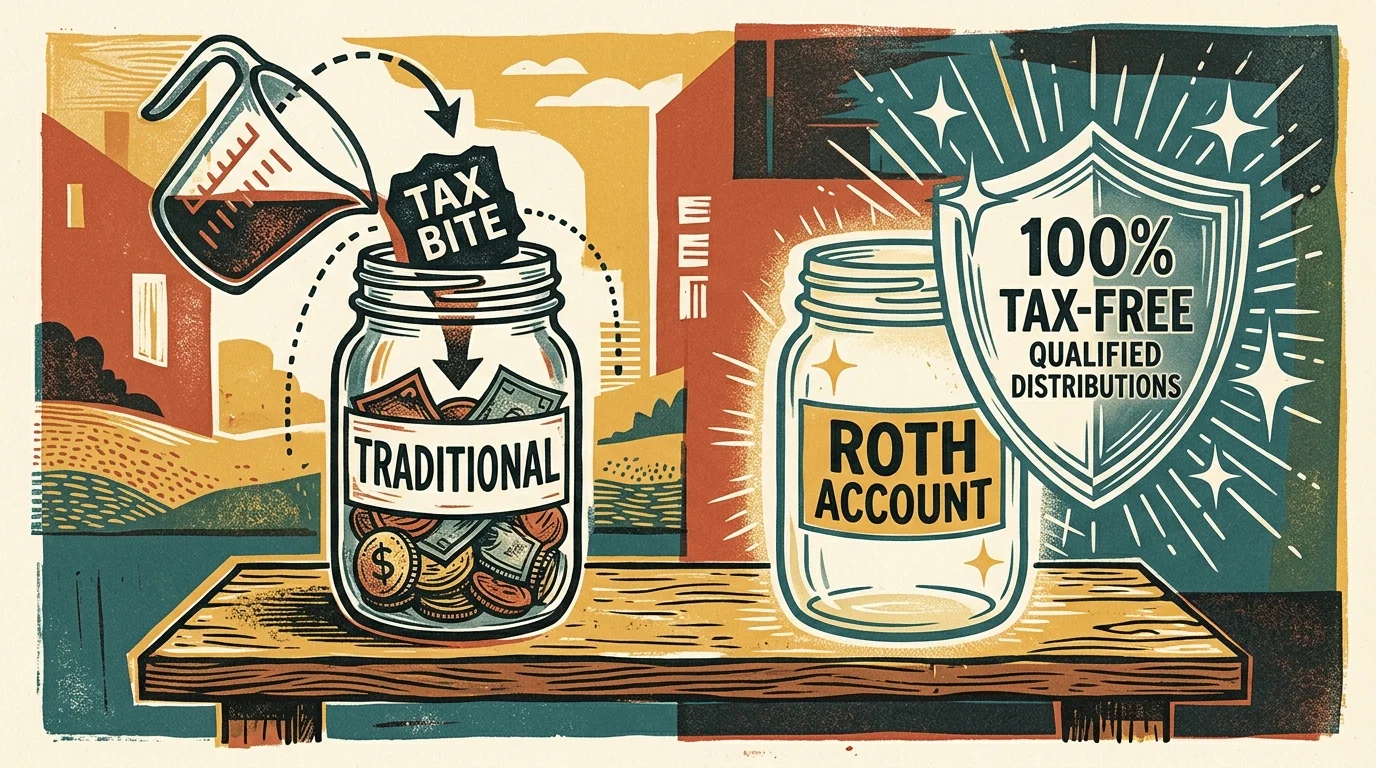
8. Leverage Tax-Free Income from Roth Accounts
Qualified withdrawals from Roth IRAs and Roth 401(k)s are 100% tax-free. Under SECURE 2.0, workplace Roth 401(k) plans are also completely exempt from lifetime RMDs.
Strategic Roth conversions during lower-income gap years allow you to pay taxes early at favorable rates. This move reduces the size of future taxable RMDs at age 73.
Roth distributions do not increase your modified adjusted gross income. Consequently, they will not trigger higher Medicare Part B and D income-related monthly adjustment surcharges (IRMAA).

9. Monetize Home Equity Through Downsizing or Reverse Mortgages
Your home equity often represents one of your largest untapped financial assets. Downsizing to a smaller property frees up tied-up capital for investment accounts while lowering ongoing maintenance costs.
Homeowners aged 62 and older can also explore Home Equity Conversion Mortgages (HECMs). The Consumer Financial Protection Bureau regulates these government-backed reverse mortgage programs.
A reverse mortgage line of credit grows over time and provides tax-free cash without requiring monthly mortgage payments. You repay the loan balance only when moving or selling the home.

10. Create Active Supplemental Income Through Phased Retirement
Transitioning gradually out of the workforce through consulting or part-time work bridges income gaps. Even modest earned income significantly slows portfolio withdrawals during your early retirement years.
Working part-time allows your investment accounts and Social Security benefits extra years to compound. It also keeps you socially connected and mentally engaged.
Remember that earning wages before your Full Retirement Age can affect your Social Security benefit payout if you earn above the annual earnings limit.
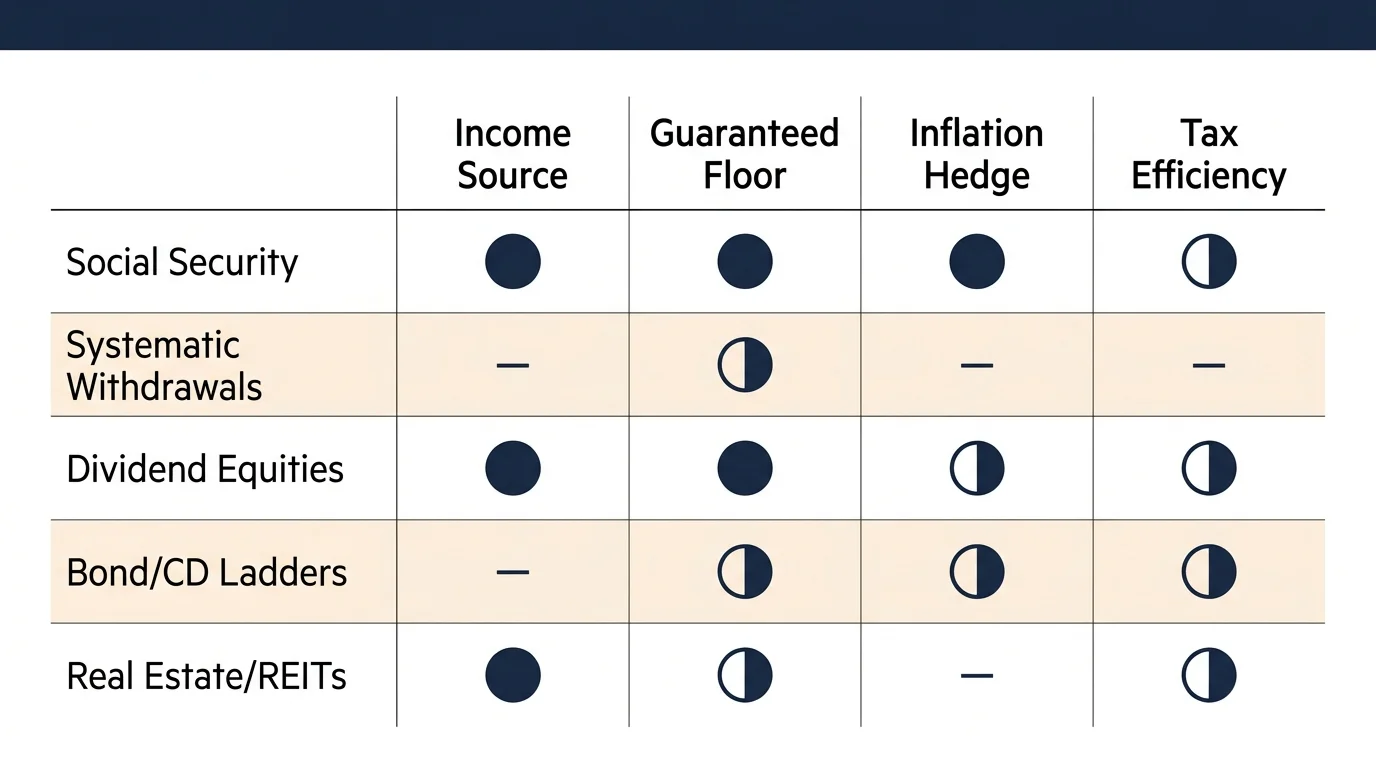
Retirement Income Sources Compared
| Income Strategy | Predictability | Liquidity & Access | Tax Treatment | Primary Risk |
|---|---|---|---|---|
| Social Security | Guaranteed for life | None (monthly stream) | 0% to 85% taxable | Policy changes |
| Portfolio Withdrawals | Variable | High | Depends on account type | Market volatility |
| Dividend Growth Stocks | Moderate to High | High | Preferential capital gains rates | Dividend cuts / market drops |
| Bond & CD Ladders | High | Moderate (at maturity) | Ordinary income / State-exempt | Reinvestment & inflation risk |
| Lifetime Annuities | Guaranteed for life | Very Low | Partially taxable (exclusion ratio) | Loss of liquidity / Issuer default |
| REITs & Real Estate | Moderate | Moderate to Low | Ordinary income / Depreciation | Vacancy & property costs |
| Roth IRAs | Flexible | High | 100% Tax-free | Investment performance |
| Reverse Mortgages | High (Line of credit) | Moderate | Tax-free loan proceeds | Compounding loan balance |
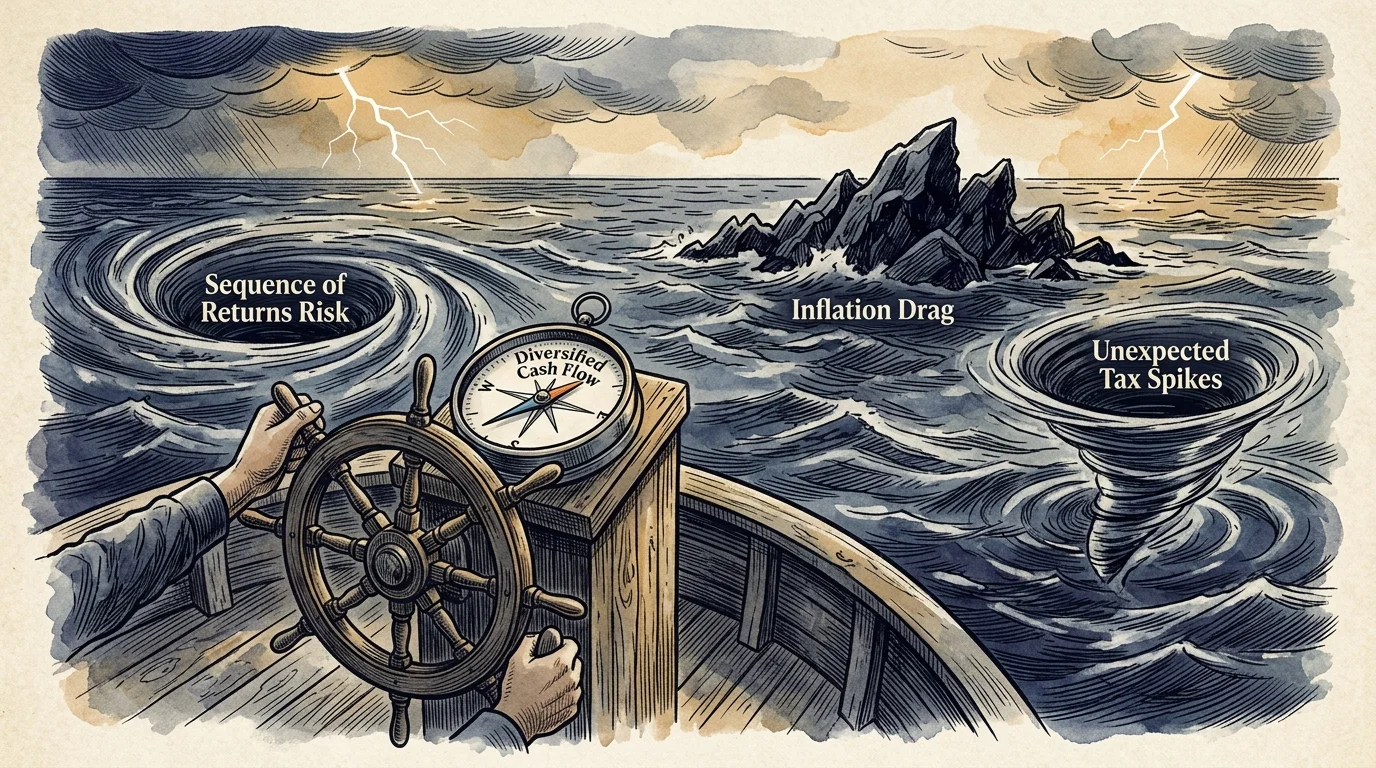
What Can Go Wrong with Retirement Income Planning
Even well-intentioned retirees encounter costly financial pitfalls. Being aware of structural vulnerabilities helps you safeguard your long-term income stream.
- Sequence of Returns Risk: Experiencing sharp market downturns in your first few years of retirement locks in severe capital losses when liquidating shares.
- Underestimating Healthcare Expenses: Out-of-pocket medical costs and long-term care needs can rapidly derail an unadjusted monthly budget.
- Ignoring the Tax Torpedo: Unplanned withdrawals can push your income into higher brackets, triggering tax on Social Security and raising Medicare IRMAA premiums.
- Over-Conservatism: Holding excessive cash in low-yielding checking accounts causes purchasing power to erode against sustained inflation over decades.
Building an emergency cash reserve of one to two years of living expenses provides a crucial buffer during market corrections.

When to Consult a Professional
Navigating tax optimization, distribution ordering, and estate planning often requires specialized expertise. You should seek guidance from a fee-only Certified Financial Planner (CFP) or CPA in specific situations:
- Complex Tax Situations: When planning multi-year Roth conversions or managing substantial tax-deferred accounts approaching RMD age.
- Pensions and Annuity Decisions: When deciding between a lump-sum distribution and a lifetime monthly payout from a legacy employer pension.
- Social Security Optimization: When coordinating spousal, survivor, or divorced-benefit claiming strategies across different age thresholds.
- Estate and Legacy Goals: When establishing trusts or tax-efficient wealth transfers to heirs while maintaining your own retirement income security.
Working with a fiduciary ensures your financial advisor must legally place your best interests above any product sales or commission incentives.
Frequently Asked Questions
What is the safest way to generate income in retirement?
The safest foundation combines guaranteed lifetime streams like Social Security, defined-benefit pensions, and fixed annuities. Layering short-term Treasury bond ladders over these benefits provides stable, default-free cash flow.
How much monthly income can a $1,000,000 portfolio generate?
Using a baseline 3.9% safe withdrawal rate, a $1,000,000 portfolio generates approximately $39,000 annually, or $3,250 per month. You can adjust this amount upward or downward based on market returns.
Can I work while collecting Social Security retirement benefits?
Yes, but earning more than $24,480 before your Full Retirement Age temporarily withholds $1 for every $2 earned above the limit. Once you reach FRA, the earnings limit disappears entirely.
In what order should I tap my retirement accounts?
A standard withdrawal sequence begins with taxable brokerage accounts, moves to tax-deferred accounts (Traditional IRAs/401(k)s), and leaves tax-free Roth accounts for last. However, strategic annual Roth conversions can optimize this order.
Next Steps for Securing Your Cash Flow
Creating an enduring retirement paycheck is not about finding a single magic investment. It involves weaving guaranteed income, market growth, and tax diversification into a coherent framework.
Take inventory of your current savings, identify your guaranteed income baseline, and calculate your projected retirement expenses today.
This article provides general retirement education and information only; everyone’s financial situation is unique. For personalized advice, consider consulting a qualified financial professional such as a CFP or CPA.
Last updated: February 2026. Retirement benefits, tax laws, and healthcare costs change frequently—verify current details with official sources.