
A single unexpected medical crisis or liability lawsuit can dismantle decades of diligent retirement savings overnight. You built your nest egg to fund an independent lifestyle, not to absorb catastrophic out-of-pocket losses.
Maintaining proper insurance shields your accumulated wealth from volatile expenses and preserves your family’s financial security. Securing essential coverage eliminates costly gaps before emergencies happen.
This guide details the five insurance policies you need to safeguard your retirement portfolio, control soaring medical costs, and secure long-term peace of mind.
1. Comprehensive Health and Medicare Coverage
Healthcare represents one of the largest expenses you face in retirement. Relying on basic coverage without supplemental protection exposes your nest egg to unlimited financial risk.
Original Medicare provides essential healthcare benefits, but it does not cover all medical costs. You must understand how its components function to protect your cash reserves.
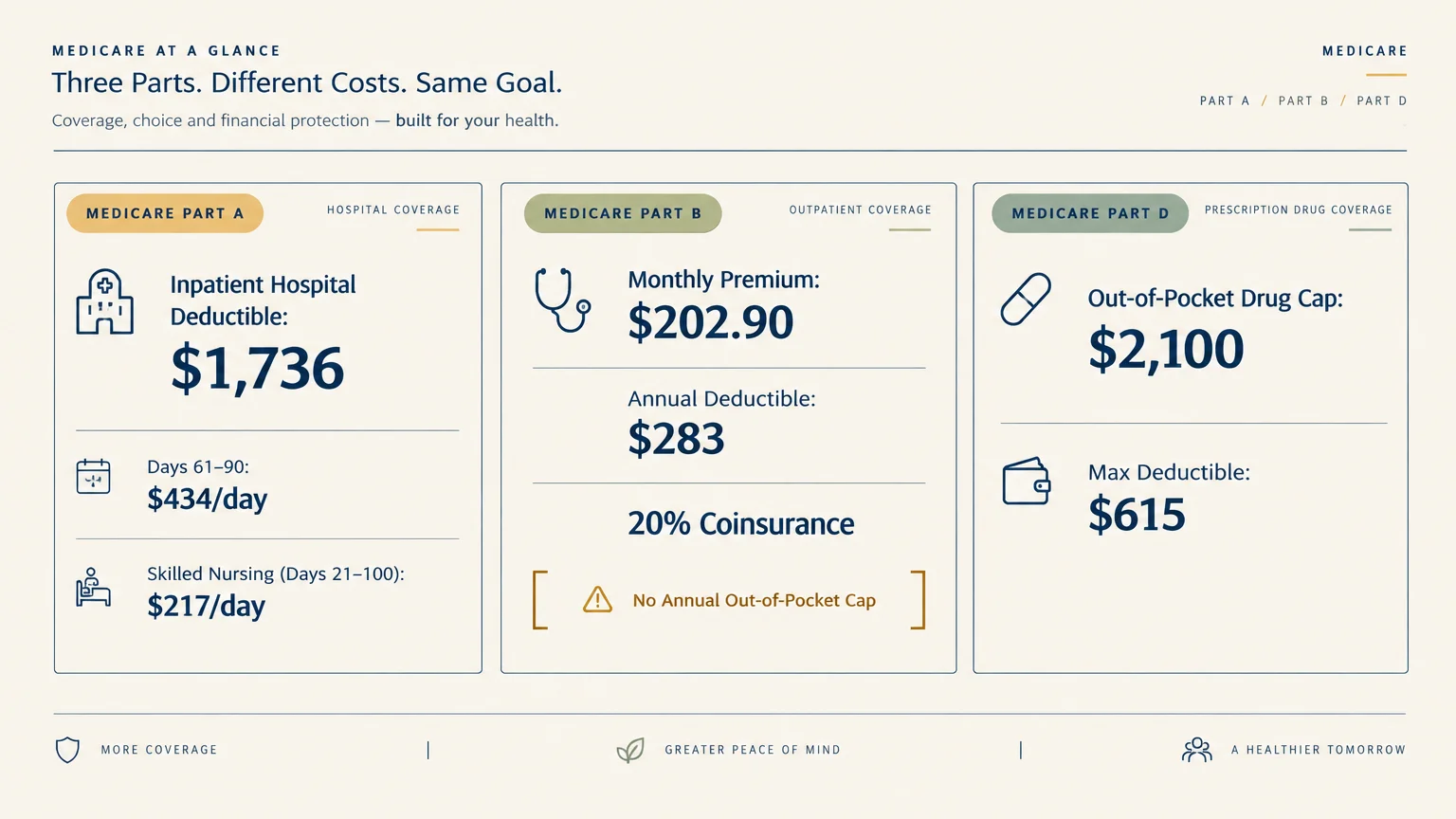
Medicare Part A covers inpatient hospital stays, hospice care, and limited skilled nursing facility care. For 2026, the Part A inpatient hospital deductible is $1,736 per benefit period.
If your hospital stay extends beyond 60 days, coinsurance costs escalate rapidly. In 2026, you pay $434 per day for days 61 through 90, and $868 per day for lifetime reserve days.
Medicare Part A also covers skilled nursing facility stays following a qualifying three-day inpatient hospitalization. While the first 20 days cost $0, days 21 through 100 require a coinsurance payment of $217 per day in 2026.
Medicare Part B covers outpatient care, doctor visits, preventive services, and durable medical equipment. The standard monthly premium for Part B is $202.90 in 2026, with an annual deductible of $283.
After meeting your Part B deductible, you typically pay a 20% coinsurance for all Medicare-approved services. Crucially, Original Medicare carries no annual out-of-pocket maximum, leaving you vulnerable to uncapped expenses.
To cap this exposure, you need either a Medicare Supplement Insurance (Medigap) plan or a Medicare Advantage plan. Visit Medicare.gov to compare approved policy options and network limits in your area.
Medigap plans pay covered out-of-pocket copayments and deductibles, allowing you to see any provider nationwide who accepts Medicare. Alternatively, Medicare Advantage plans bundle coverage through private regional networks, often including vision and dental benefits.
Medicare Part D covers outpatient prescription drugs. Under the Inflation Reduction Act, out-of-pocket spending on covered Part D medications is capped at $2,100 in 2026.
The maximum allowable Part D annual deductible sits at $615 in 2026, with a national base beneficiary premium of $38.99. Enrolling in Part D protects you from volatile pharmacy charges throughout your retirement.

2. Long-Term Care Insurance
Long-term care represents the single greatest threat to retirement solvency. Most retirees mistakenly assume Medicare will pay for assisted living or home health aides when physical mobility declines.
According to federal data, approximately 70% of Americans turning age 65 will require some form of long-term care services during their lifetime. Standard health insurance and Medicare exclude non-skilled custodial assistance entirely.
Care costs continue to climb across the country. According to the 2026 CareScout Cost of Care Survey, the national median cost for a private nursing home room is $129,575 per year, or roughly $10,798 per month.
A semi-private room in a skilled nursing facility costs a median of $114,975 annually. Even receiving care at home creates steep expenses that can quickly deplete your taxable investment accounts.
Hiring a non-medical home health aide costs a median of $80,080 annually, based on 44 hours of weekly care at $35 per hour. Meanwhile, assisted living communities carry a national median cost of $74,400 per year.
“A long-term care policy is something you should consider in your late 50s or early 60s to protect your retirement nest egg.” — Suze Orman, Personal Finance Author
You can purchase traditional long-term care insurance or hybrid asset-based policies. Hybrid policies combine life insurance or annuities with long-term care riders, paying benefits if you need care or leaving a death benefit to heirs if you do not.
Federal tax rules offer generous deductions for eligible coverage. Under IRS Revenue Procedure 2025-32, tax-deductible premium limits for qualified policies in 2026 are $1,860 for ages 51 to 60, $4,960 for ages 61 to 70, and $6,200 for ages 71 and older.
For indemnity-style policies, the IRS per-diem tax-free benefit cap sits at $420 per day in 2026. Review qualified medical deduction guidelines at IRS.gov to evaluate your tax savings.
Under SECURE 2.0 rules, retirement account owners can also take penalty-free distributions from qualified plans like IRAs and 401(k)s to pay qualified long-term care insurance premiums. This provision eases cash flow constraints during your retirement years.

3. Homeowners and Property Insurance
Your primary residence is often your most valuable physical asset and an essential foundation of your retirement balance sheet. Maintaining comprehensive homeowners insurance safeguards both your equity and your physical shelter.
Even if you pay off your mortgage, dropping property insurance or cutting coverage levels introduces extreme financial danger. Severe weather events, structural fires, or water pipe collapses can destroy your home within hours.
Average annual homeowners insurance premiums nationwide range between $1,966 and $2,720 for standard coverage on a $350,000 dwelling. Rates vary dramatically depending on location, construction materials, and regional climate volatility.
Ensure your policy reflects full extended replacement cost coverage rather than basic market value. Replacement cost coverage pays to rebuild your home using modern building codes and labor rates, regardless of inflationary price surges.
Standard homeowners insurance policies exclude flood damage and ground movement. If you live near waterways, low-lying coastal zones, or fault lines, you must secure dedicated flood insurance and earthquake endorsements.
Add water backup and sewer overflow endorsements to your existing policy. These inexpensive riders protect against subterranean plumbing failures that standard structural policies consistently exclude.
You should also review personal property limits for valuable items like jewelry, art, and family heirlooms. Scheduling endorsements ensures adequate reimbursement without running into standard policy sub-limits.

4. Auto Insurance and Umbrella Liability Protection
Daily driving creates significant legal liability that can jeopardize your lifetime savings. Every time you drive, you risk a collision that could result in substantial property damage or severe personal injury claims.
In 2026, the national average cost for full-coverage car insurance is approximately $2,324 to $2,670 per year, while state-mandated minimum liability coverage averages $773 per year. However, purchasing bare minimum liability limits is a dangerous retirement mistake.
Most state-mandated liability minimums only cover $25,000 to $50,000 in bodily injury per accident. In serious collisions involving modern vehicles and hospital care, medical and property damages quickly exceed these minimal thresholds.
If accident damages exceed your policy limits, injured parties can target your home equity, taxable brokerage accounts, and future income streams. To prevent this, increase your underlying auto liability limits to at least $250,000 per person and $500,000 per incident.
Once you establish robust underlying property and auto limits, add a personal umbrella liability policy. Umbrella coverage acts as an excess liability shield, absorbing catastrophic claims that exceed your basic underlying policies.
A $1 million to $2 million umbrella policy typically costs between $200 and $400 annually. This nominal cost provides exceptional defense against dog bite claims, slip-and-fall injuries on your property, and severe vehicular accidents.
Learn more about managing financial and liability exposure by reviewing consumer guides from the Consumer Financial Protection Bureau. Shielding your assets ensures that unexpected legal disputes will not derail your retirement security.

5. Life Insurance for Survivor and Wealth Protection
Life insurance needs shift as you transition from wealth accumulation into wealth distribution. While child-rearing expenses and mortgages decrease, life insurance remains an essential vehicle for survivor income and estate planning.
According to the 2026 LIMRA and Life Happens Insurance Barometer Study, 52% of American adults own life insurance, including 58% of Baby Boomers and 53% of Gen X. However, 38% of adults—representing 92 million Americans—admit they need more coverage.
Pre-retirees face acute risks because 47% of insured workers rely exclusively on employer-sponsored group life insurance. When you retire, these workplace group policies generally terminate, leaving you uninsured when private coverage costs substantially more.
LIMRA findings indicate that 47% of households would face severe financial distress within six months if a primary earner passed away. Ensuring that your spouse retains sufficient replacement income remains a paramount financial priority.
“The purpose of insurance is not to make you rich. It’s to protect you from losing what you have.” — Dave Ramsey, Personal Finance Author
If your retirement relies on a single-life defined-benefit pension or a larger Social Security benefit, the surviving spouse faces a drop in household cash flow upon your death. Term life insurance provides an affordable bridge to cover this income gap until portfolio assets mature.
Permanent life insurance, such as whole life or universal life, serves specialized estate planning functions. Permanent policies provide guaranteed liquidity to settle estate taxes, divide inheritance equitably among heirs, or fund charitable bequests.
Read comprehensive policy comparisons on Investopedia to evaluate whether term or permanent insurance best aligns with your legacy goals. Proper life insurance coverage guarantees that your partner maintains their standard of living regardless of life’s timing.

Comparing Core Insurance Policies for Retirees
Balancing multiple policies requires allocating premium dollars toward the risks that carry the greatest financial consequences. Comparing costs and coverage thresholds helps you optimize your protection.
The table below summarizes the five essential policies, their core functions, current cost benchmarks, and their strategic priority for retirement protection.
| Policy Type | Primary Risk Protected | 2026 Cost / Premium Benchmarks | Strategic Role in Retirement |
|---|---|---|---|
| Comprehensive Medicare (Parts B, D, & Medigap) | Outpatient care, hospitalization copays, catastrophic drug expenses | Part B: $202.90/mo; Part D deductible: up to $615; Medigap: $150–$300/mo | Non-negotiable foundation to eliminate uncapped healthcare exposure |
| Long-Term Care Insurance | Custodial care, assisted living, nursing facilities, home health aides | Varies by age; national median nursing room costs $114,975–$129,575/yr | Protects personal retirement savings from being exhausted by chronic illness |
| Homeowners Insurance | Structural damage, personal property loss, basic home liability | National average: $1,966–$2,720/year for standard dwelling coverage | Guarantees replacement cost for your home and personal property |
| Auto & Umbrella Liability | Vehicular crashes, legal defense costs, multi-million dollar liability lawsuits | Auto full coverage: $2,324–$2,670/yr; Umbrella: $200–$400/yr per $1M | Shields home equity, retirement accounts, and savings from legal judgments |
| Life Insurance | Spousal income loss, pension loss, estate settlement costs, debt liquidation | Term rates depend on health/age; 47% of families face hardship within 6 months | Safeguards survivor cash flow and delivers tax-free estate liquidity |
Evaluating these policies collectively prevents costly redundancies and reveals dangerous vulnerabilities. Prioritize policies that protect against catastrophic losses over those that cover small, budgetable expenses.

Essential Insurance Checklist for Retirees
Managing an insurance portfolio requires regular auditing to ensure policy terms match your changing net worth and lifestyle. Use this actionable checklist to review your coverage annually.
- Conduct a Medicare Annual Review: Evaluate your Part D prescription drug formulary and Medicare Advantage network every autumn during Open Enrollment to avoid unnecessary out-of-pocket costs.
- Audit Property Replacement Values: Contact your homeowners insurance carrier to confirm that your dwelling limit reflects current regional rebuilding costs rather than outdated historical figures.
- Calibrate Auto Liability Limits: Increase auto liability limits to at least $250,000/$500,000/$100,000 so you qualify for comprehensive personal umbrella liability coverage.
- Acquire an Umbrella Policy: Purchase a personal umbrella liability policy equal to or exceeding your total non-qualified net worth, including home equity and taxable investment accounts.
- Review Long-Term Care Strategies: Evaluate traditional long-term care options or hybrid life/LTC policies between ages 55 and 65 to lock in insurability and maximize IRS tax deductions.
- Update Beneficiary Designations: Inspect primary and contingent beneficiary designations on all life insurance policies, annuities, and retirement accounts to ensure they align with your estate plan.
- Inquire About Mature Driver and Bundling Discounts: Take state-approved defensive driving courses and bundle home and auto policies with a single insurer to secure premium discounts up to 15% to 25%.
Consult organizations like AARP for educational guides on senior discounts and defensive driving credits. Consistently completing this checklist keeps your insurance aligned with your overall financial plan.

Professional vs. Self-Guided Insurance Planning
Deciding whether to manage your insurance strategy independently or partner with a licensed professional depends on the complexity of your estate. Many basic insurance needs are simple, but multi-layered portfolios require specialized technical guidance.
Review the scenarios below to determine when self-guided research works well and when you should seek professional consultation.
Scenario 1: Navigating the Medicare Transition. Enrolling in Original Medicare, Part D, and Medigap can be completed independently using official state health insurance assistance programs (SHIP). However, if you retire past age 65 with continuous employer health coverage, an independent broker ensures you avoid costly Part B late-enrollment penalties.
Scenario 2: Purchasing Long-Term Care Protection. Navigating underwriting criteria, inflation protection riders, and partnership plan protections is difficult without specialized guidance. Working with an independent long-term care specialist allows you to compare traditional policies against asset-based hybrid policies across multiple top-rated insurers.
Scenario 3: Structuring Umbrella Liability Coverage. Calculating your net worth and coordinating liability minimums between auto, boat, and homeowners policies is manageable independently. However, if you own rental real estate, hold board positions, or operate a trust, a professional risk advisor ensures you eliminate liability gaps.
Scenario 4: Managing Permanent Life Insurance and Estate Taxes. Basic term life insurance policies require little professional intervention. Conversely, using permanent life insurance for irrevocable life insurance trusts (ILITs), business succession, or estate tax equalization requires direct collaboration with a Certified Financial Planner (CFP) and an estate attorney.

Common Mistakes to Avoid
Retirees often make costly errors when managing insurance, either by paying for redundant coverage or failing to guard against major financial catastrophes. Avoiding these common missteps preserves your cash flow and safeguards your wealth.
1. Relying Solely on Original Medicare: Assuming that Medicare Part A and Part B provide full medical coverage is a dangerous misconception. Without Medigap or Medicare Advantage, the lack of an annual out-of-pocket maximum can lead to tens of thousands of dollars in medical debt.
2. Assuming Medicare Covers Long-Term Custodial Care: Medicare only covers up to 100 days of skilled nursing care following a hospital admission, with substantial coinsurance starting on day 21. It pays nothing for permanent assisted living or custodial home care, making dedicated long-term care planning essential.
3. Losing Group Life Insurance Without a Replacement Plan: Many workers assume their employer life insurance will convert affordably when they retire. When group coverage lapses, deteriorating health can make private replacement coverage cost-prohibitive, leaving surviving spouses vulnerable.
4. Retaining State-Minimum Auto Liability Limits: Preserving minimum auto liability limits to save a few dollars each month exposes your life savings to devastating judgments. A single serious accident can result in lawsuits that exhaust minimum limits within days.
5. Underinsuring Property Rebuilding Costs: Failing to adjust your homeowners dwelling coverage for inflation leaves you underinsured if a total disaster occurs. If your coverage falls below 80% of replacement cost, insurers may penalize partial claims, increasing your out-of-pocket expenses.
Frequently Asked Questions
Do I still need life insurance once I retire and pay off my mortgage?
You may not need life insurance if your spouse has sufficient independent retirement income and you have no remaining debts. However, if your spouse relies on your pension or Social Security, maintaining coverage protects against immediate income reduction.
What is the best age to purchase long-term care insurance?
Most financial planners recommend exploring long-term care insurance between ages 55 and 65. Applying during this window allows you to secure lower premiums and pass medical underwriting before chronic conditions emerge.
How much umbrella insurance coverage should a retiree maintain?
Your umbrella liability policy limit should equal or exceed your total net worth, excluding assets protected by state bankruptcy laws. Most retirees carry between $1 million and $3 million in coverage to safeguard their real estate and investment portfolios.
Why is Medigap or Medicare Advantage necessary if Part A and B are active?
Original Medicare requires a 20% coinsurance for Part B services without any cap on out-of-pocket spending. Medigap or Medicare Advantage caps this exposure, shielding your finances from catastrophic hospital and specialty healthcare expenses.
Securing Your Retirement Future
Managing risk is just as critical to a successful retirement as choosing the right investment assets. Securing comprehensive health, long-term care, property, auto, and life coverage transforms your financial plan from vulnerable to resilient.
Take time this month to review your declarations pages, verify deductibles, and eliminate dangerous coverage gaps. Proactive insurance planning ensures that unexpected events will not compromise your independence or your family’s financial security.
This article provides general retirement education and information only. Everyone’s financial situation is unique—what works for others may not work for you. For personalized advice, consider consulting a qualified financial professional such as a CFP or CPA.
Last updated: October 2026. Retirement benefits, tax laws, and healthcare costs change frequently—verify current details with official sources.