Social Security and Tax Rules Every Working Retiree Must Know
Before accepting remote assignments, you must understand how earned income interacts with your federal retirement benefits. Careful planning ensures you keep the money you earn without triggering unexpected tax or benefit penalties.
If you claim Social Security benefits before your Full Retirement Age (FRA), your earnings are subject to the annual retirement earnings test. Earning too much can temporarily pause a portion of your monthly benefit checks.
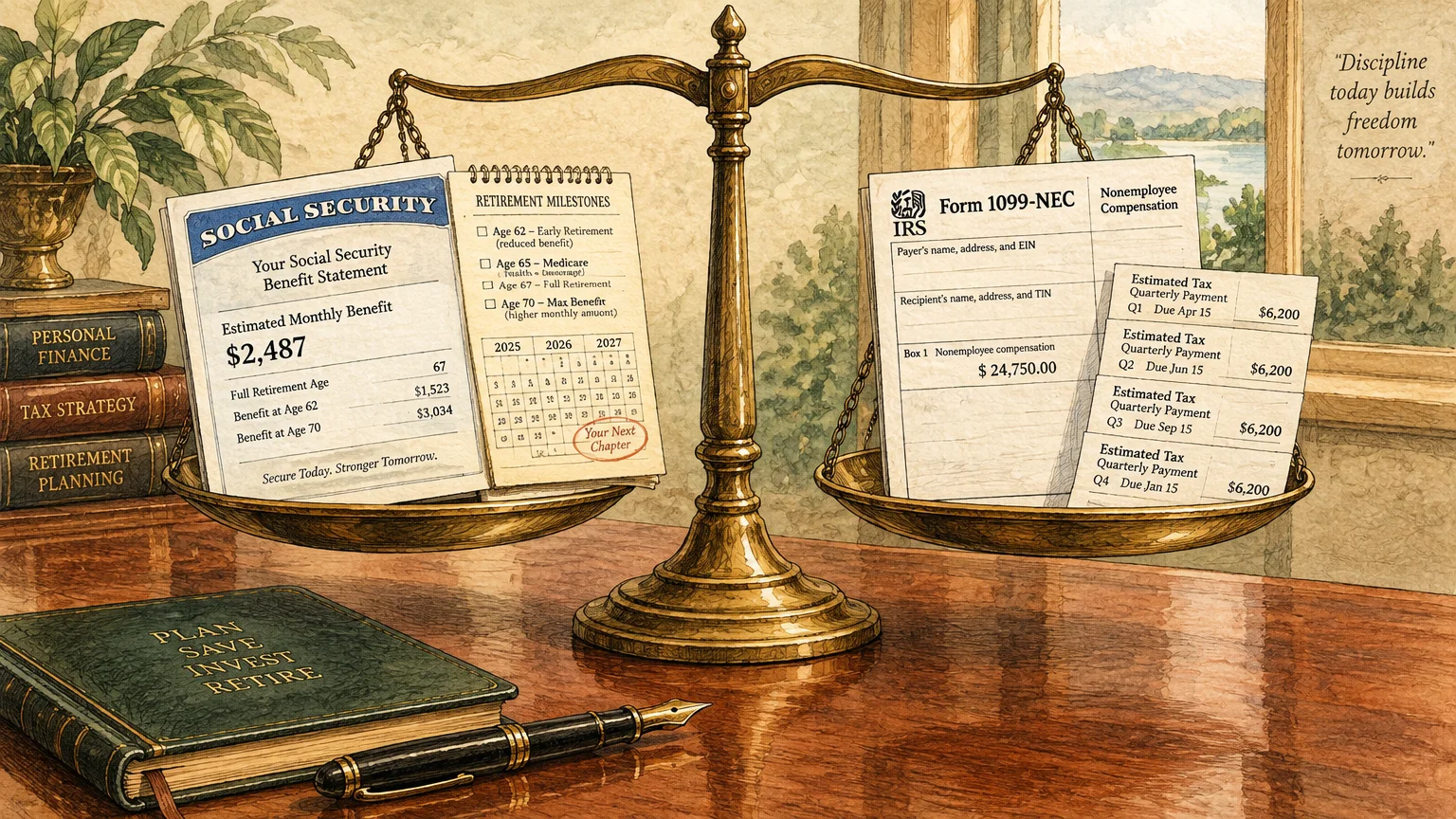
According to the Social Security Administration, the annual earnings limit is $23,400 ($1,950 per month) in 2025 and rises to $24,480 in 2026. If you earn more than this cap, the government withholds $1 in benefits for every $2 earned above the threshold.
A more generous limit applies during the calendar year you reach your Full Retirement Age. In 2025, that limit is $62,160 for earnings made before your birth month, withholding $1 for every $3 earned above the limit.
Once you reach Full Retirement Age, the earnings test disappears entirely. You can earn an unlimited amount of remote income without losing a single dollar of your Social Security benefits.
You must also prepare for self-employment taxes. The Internal Revenue Service requires independent contractors to pay a 15.3% self-employment tax (covering Medicare and Social Security) on net earnings exceeding $400 in a calendar year.
Independent contractors receive Form 1099-NEC rather than Form W-2 at tax time. Because platforms do not withhold taxes from your weekly pay, setting aside 20% to 25% of each paycheck protects you from year-end surprises.









I’m looking for extra income on line .
I’m looking for some extra income, to be done on line
I would like to get an job doing something that i like to do. Can you give me some ideas
I have been in transportation all my life would like something to do with customer service if possible. Thank you.
I am looking for a position for remote work in either of these fields Virtual Customer Support and Reservation Assistant or Microtask Auditing and Data Entry. I have over 30 years of experience in both fields.
I am looking for regular part-time remote work in the legal field.
I would like more information on this job.