
Losing a loved one brings emotional hardship alongside an urgent financial transition. When a family member passes away, their government and private retirement benefits do not simply disappear or transfer automatically; federal rules govern exactly how, when, and to whom payments shift. Navigating these administrative changes protects your household income, prevents costly overpayment penalties, and unlocks monthly survivor payments you may be legally owed. From Social Security benefit recalibrations and Medicare Part B premium refunds to pension survivor annuities, understanding these eight specific benefit shifts ensures you maintain financial stability and claim every dollar your family deserves during a difficult time.
1. Social Security Payments for the Month of Death Must Be Returned
Social Security benefits pay out in arrears, meaning the check you receive in any given month actually covers the prior month’s living allowance. Under federal law, a beneficiary must live through every single day of a calendar month to retain eligibility for that month’s payment. If your family member passes away on the last day of the month—or anytime earlier—they are not entitled to the Social Security benefit designated for that month.
When a death occurs, the funeral home typically notifies the Social Security Administration (SSA) electronically. However, administrative processing takes time. If the SSA issues a payment after the date of death for a month the beneficiary did not fully survive, that money must be returned immediately. Attempting to spend these funds creates an administrative headache and triggers automated federal reclamation procedures.
If the benefit arrives via direct deposit, the SSA will request an automatic clawback through the financial institution. You should leave the funds in the bank account until the Treasury Department completes this automated pull. If the deceased beneficiary received physical paper checks, do not cash or deposit them. Mail uncashed checks directly back to your local Social Security field office with a note explaining the date of death.
2. The $255 Lump-Sum Death Payment Triggers
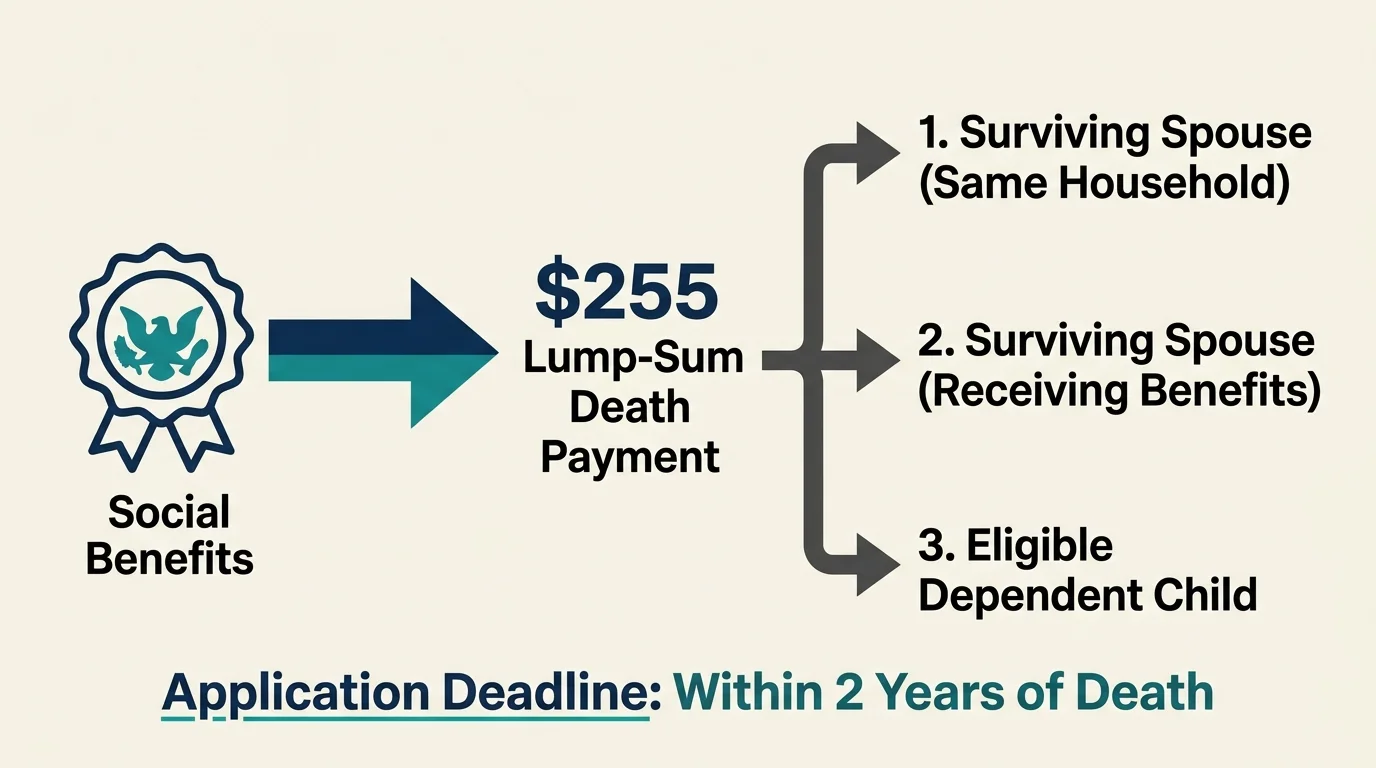
Federal regulations establish a one-time payment of $255 upon the death of an insured worker under 20 CFR § 404.390. This specific figure has remained fixed since 1954, serving as a modest financial offset for immediate final expenses. While it does not cover modern funeral expenses, claiming it remains an important administrative step for surviving family members.
Not every relative qualifies to receive this payment. The law restricts eligibility to specific surviving family members in a strict order of priority:
- A surviving spouse: You qualify if you were living in the same household as the deceased worker at the time of their death.
- A secondary surviving spouse: If you lived apart, you may still qualify if you were already receiving secondary benefits on the worker’s record or became eligible for survivor benefits upon their death.
- An eligible dependent child: If no surviving spouse exists, a child who meets the requirements to receive monthly survivor benefits on the worker’s record can claim the payment.
You must file an application for the lump-sum death payment within exactly two years from the date of the worker’s death. Federal regulations strictly enforce this statutory deadline, so submitting your claim promptly protects your right to these funds.
3. Monthly Social Security Transitions to a Survivor Benefit
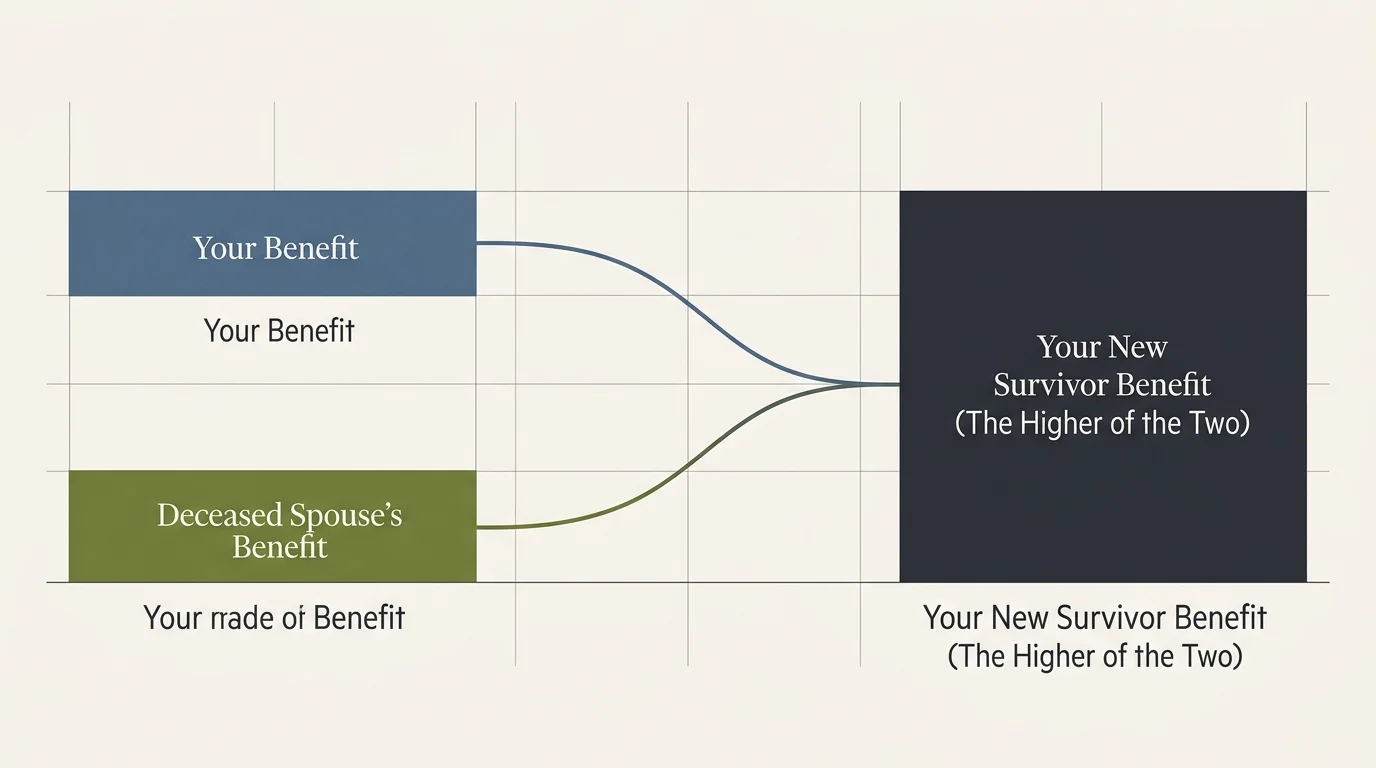
When a worker dies, their monthly retirement benefit ends, but eligible family members can convert that entitlement into ongoing monthly survivor benefits. This transition represents one of the most critical income adjustments for a surviving spouse. A household that previously relied on two Social Security checks will drop to receiving a single, larger check.
As a surviving spouse, you can claim either your own earned Social Security retirement benefit or up to 100% of your deceased spouse’s benefit—whichever amount is higher. You cannot keep both full checks. The SSA automatically steps your household income up to the higher threshold, terminating the lower payment amount entirely.
The exact percentage of the deceased worker’s benefit you receive depends directly on your age and relationship status at the time you file for survivor benefits:
| Eligible Beneficiary Category | Percentage of Deceased Worker’s Benefit | Key Eligibility Conditions |
|---|---|---|
| Surviving Spouse at Full Retirement Age (FRA) | 100% | Must have reached full retirement age (66 to 67, depending on birth year). |
| Surviving Spouse (Age 60 to FRA) | 71.5% to 99% | Benefit permanently reduced for every month claimed prior to reaching full FRA. |
| Disabled Surviving Spouse (Ages 50–59) | 71.5% | Disability must have started within seven years of the worker’s death. |
| Surviving Spouse Caring for Child | 75% | Must care for the deceased’s child who is under age 16 or disabled. |
| Eligible Dependent Minor Children | 75% | Must be unmarried and under age 18 (or 19 if attending high school full-time). |
Unlike standard retirement benefits, you cannot apply for Social Security survivor benefits online or via email. Federal rules require you to complete this application over the phone by calling 1-800-772-1213 or by scheduling an in-person appointment at your local Social Security field office.

4. Medicare Coverage Terminates and Part B Refunds Are Issued
Healthcare coverage through original Medicare (Part A and Part B) or a Medicare Advantage plan terminates automatically on the date of a beneficiary’s death. Healthcare providers cannot bill Medicare for medical services, procedures, or prescriptions provided after the documented date of death.
Because Medicare Part B premiums are often withheld in advance directly from monthly Social Security payments, timing mismatches frequently happen. If the SSA deducted a Part B premium from a benefit check issued after the date of death, that premium money rightfully belongs to the deceased individual’s estate or surviving spouse.
To recover overpaid premiums or unpaid benefits owed to the deceased individual, you must submit Form SSA-1724, officially titled Claim for Amounts Due in the Case of Deceased Beneficiary. Filing this document with the SSA ensures that any advance Medicare deductions or retroactive benefit balances release directly to the designated legal survivor or estate administrator without getting lost in bureaucratic delays.
If your loved one maintained supplemental coverage through a private Medicare Supplement (Medigap) policy or a Part D prescription drug plan, you must notify those individual insurance carriers separately. Providing them with a copy of the death certificate stops recurring monthly bank drafts and cancels the active policy.
5. Private Pensions Transition to Joint and Survivor Annuities
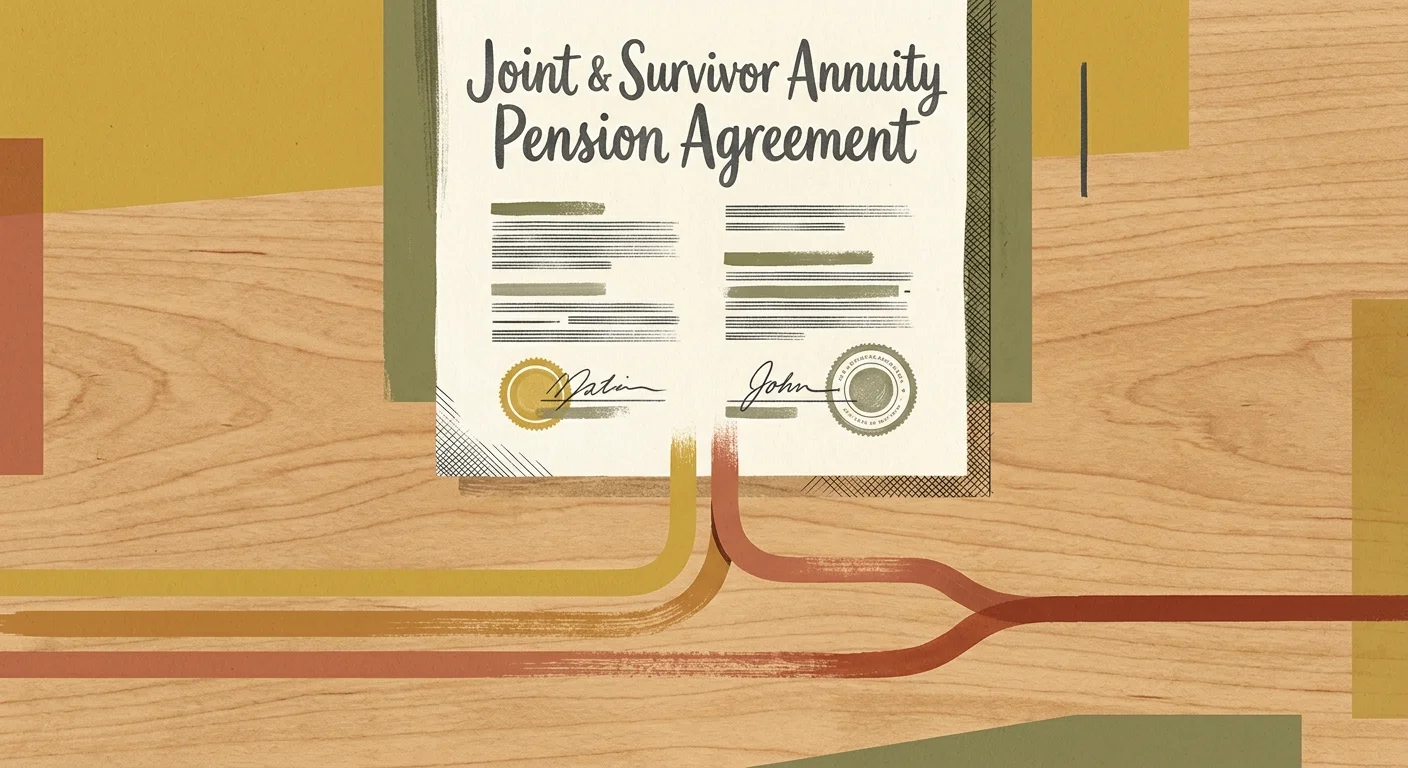
If your family member earned a traditional defined-benefit pension through a private employer, the income stream does not simply stop without review. The federal Employee Retirement Income Security Act (ERISA) and the Retirement Equity Act protect surviving spouses by regulating how pension plans handle lifetime payouts.
Under federal ERISA standards, all qualified private pension plans must pay benefits to married participants in the form of a Qualified Joint and Survivor Annuity (QJSA). When the retired employee passes away, the plan must pay a monthly lifetime annuity to the surviving spouse equal to at least 50%—and up to 100%—of the monthly payment the retiree received while living.
“Planning for survivor benefits isn’t just about money; it is about providing peace of mind and financial protection for the spouse who remains behind.” — Ed Slott, CPA and IRA Distribution Expert
A pension plan can only drop survivor benefits or pay a single-life annuity if the surviving spouse explicitly signed a formal, notarized written waiver when the employee originally retired. If you never executed that notarized waiver, the pension plan administrator must continue paying your monthly annuity benefit. Contact the employer’s human resources or plan administrator immediately to submit a death certificate and trigger the survivor payment structure.

6. Veterans Affairs (VA) Survivor Benefits May Activate
When a military veteran passes away, their monthly VA disability compensation or military retirement pay stops immediately on the date of death. However, military service unlocks distinct, tax-free survivor benefits designed to protect the veteran’s family members from severe hardship.
The primary benefit available to eligible military survivors is Dependency and Indemnity Compensation (DIC). This monthly, tax-free benefit pays out to qualifying surviving spouses, children, or dependent parents of service members who died in the line of duty, or veterans whose death resulted from a service-connected injury or illness.
For surviving spouses of eligible veterans, the standard tax-free base rate for VA Dependency and Indemnity Compensation is $1,699.36 per month. You may receive additional monthly allowances if the veteran had a high disability rating for at least eight continuous years before death, or if you require regular aid and attendance.
You can apply for DIC directly through the U.S. Department of Veterans Affairs by submitting VA Form 21P-534EZ along with official military discharge documents (DD-214) and medical death certificates establishing the service-connected link.

7. Your Tax Status Changes and Taxability Thresholds Shift
The loss of a spouse triggers significant, long-term tax consequences that catch many surviving retirees off guard. In financial planning, this tax shift is widely known as the “single taxpayer trap.”
In the calendar year your spouse passes away, you can still file your federal income tax return using the advantageous Married Filing Jointly status, assuming you have not remarried before the end of that tax year. If you maintain dependent children at home, you may qualify for Qualifying Surviving Spouse status for the following two tax years, which preserves the joint tax brackets and standard deduction amounts.
However, once you transition to Filing Single, your financial picture changes drastically:
- Smaller Standard Deduction: Your standard deduction drops by roughly half compared to the joint filing allowance, increasing your taxable income base.
- Compressed Tax Brackets: Single tax brackets kick in at much lower income thresholds, pushing every extra dollar of your income into higher tax brackets far quicker.
- Social Security Taxability Thresholds: The federal thresholds that determine whether your Social Security benefits face income taxes do not adjust automatically. Up to 85% of your survivor benefits become taxable if your combined income exceeds $25,000 as a single filer, compared to $32,000 for joint filers, according to the Internal Revenue Service.
Managing this tax shift requires reviewing your retirement account withdrawals, recalculating estimated quarterly payments, and adjusting tax withholding amounts on pension and survivor benefits early in the calendar year following your loss.
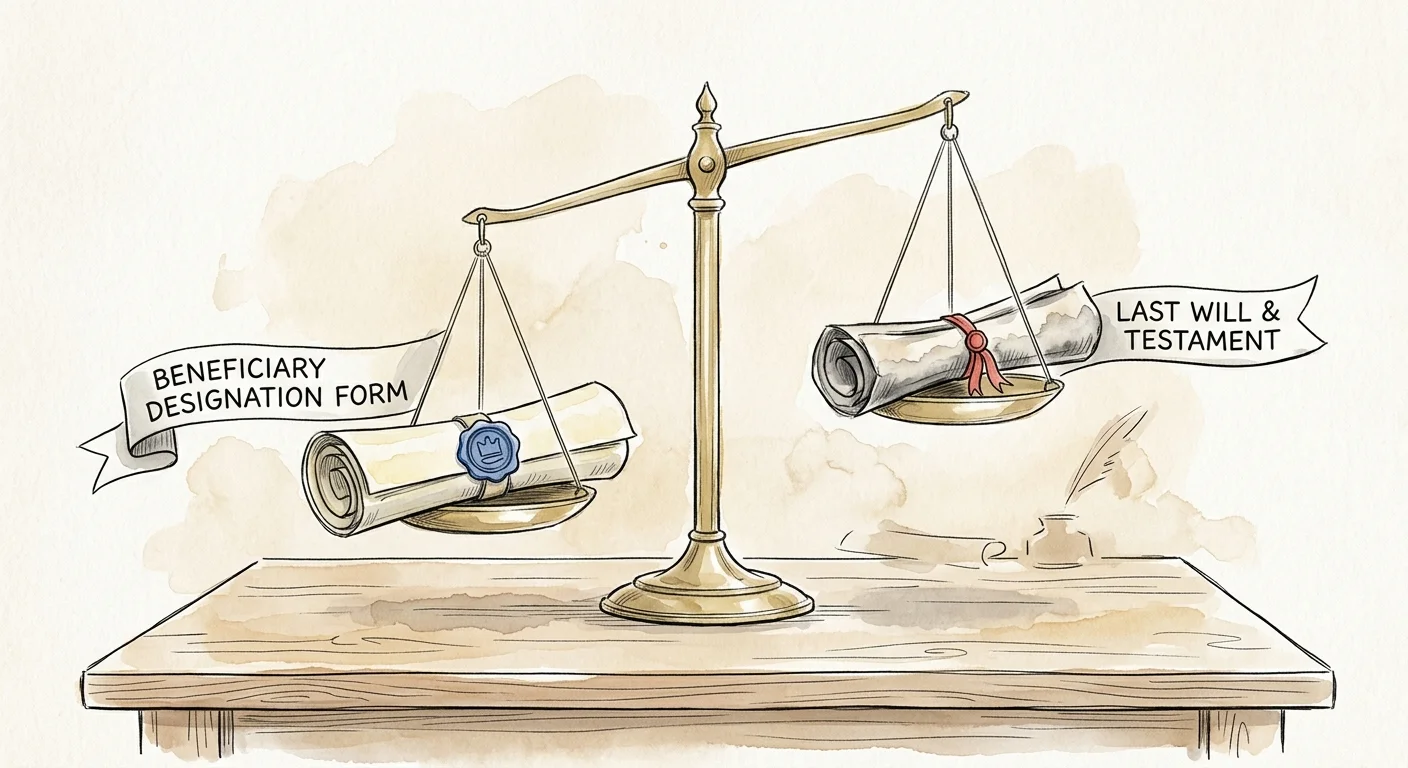
8. Beneficiary Designations Override Will Instructions for Retirement Accounts
A common misconception during estate settlement is that a last will and testament determines who inherits financial assets. In reality, legal beneficiary designations attached directly to individual accounts take complete legal precedence over any instructions written inside a will or revocable trust.
Assets governed directly by beneficiary forms include:
- Individual Retirement Accounts (Traditional and Roth IRAs)
- Employer 401(k), 403(b), and 457(b) retirement plans
- Life insurance policy payouts
- Annuity contracts
- Bank accounts with Payable-on-Death (POD) or Transfer-on-Death (TOD) designations
When you notify financial custodians of an account owner’s passing, those assets pass directly to the named primary beneficiaries outside of probate court. As a surviving spouse inheriting a traditional IRA or 401(k), federal tax laws offer special flexibility: you can perform a spousal rollover, moving the inherited funds into your own IRA to defer required minimum distributions (RMDs) until you reach your own mandated RMD age.
Non-spouse beneficiaries (such as adult children) face strict distribution rules under the federal SECURE Act. Most non-spouse heirs must liquidate the entire inherited traditional retirement account within 10 years of the original owner’s death, which can trigger significant income tax liabilities if not strategically planned.

Pitfalls to Watch For
Navigating benefit changes while grieving leaves room for costly administrative oversights. Avoiding these common errors protects your long-term security:
- Spending post-death Social Security payments: Allowing automatic deposits to remain in your account and spending them leads to mandatory Treasury reclamation operations that can freeze or overdraw your bank balance.
- Missing the two-year deadline for the lump-sum payment: Delaying your claim beyond the statutory two-year window permanently forfeits your right to the $255 Social Security lump-sum death benefit.
- Assuming the funeral home files your survivor claim: Funeral directors report deaths to the SSA to stop primary benefits, but they cannot file your formal application for monthly survivor payments. You must contact Social Security directly to schedule an application appointment.
- Ignoring tax withholding changes: Failing to adjust your federal and state tax withholding after switching to single filing status often results in unexpected tax bills and underpayment penalties when filing season arrives.
- Leaving outdated beneficiary designations intact: Neglecting to update beneficiary forms on your own retirement accounts and life insurance policies after a loved one passes can accidentally leave assets to ex-spouses or deceased relatives.

Getting Expert Help
While basic benefit updates are straightforward, complex financial transitions call for professional guidance. You should consider working with a qualified expert in the following situations:
- Navigating complex IRA rollover strategies: A Certified Financial Planner (CFP) can structure inherited IRA distributions to minimize tax impacts under current SECURE Act regulations.
- Handling estate tax changes and multi-state real estate: An experienced CPA or tax professional can guide you through single tax filing shifts, income tax withholding, and final return filing requirements.
- Settling contested estates or ambiguous accounts: An elder law or estate planning attorney can resolve conflicts between conflicting beneficiary forms and traditional estate planning documents.
Frequently Asked Questions
How long do I have to report a death to Social Security?
You should report a death as soon as possible. Funeral homes typically submit electronic death notices directly to the SSA, but you should call 1-800-772-1213 to confirm the report and schedule your survivor benefit appointment promptly.
Can I collect my own Social Security benefit and my deceased spouse’s benefit at the same time?
No. Federal law prohibits stacking both full benefits. The SSA will pay you an amount equal to the higher of the two benefit amounts, effectively replacing your smaller check with the larger available payment.
What happens to a Medicare Advantage plan when someone passes away?
Medicare Advantage coverage ends automatically on the date of death. Providers cannot bill the plan for services rendered after death, and any advance premium payments made beyond the month of death are refunded to the estate.
How does a surviving spouse apply for VA Dependency and Indemnity Compensation?
You apply by completing VA Form 21P-534EZ and submitting it to the Department of Veterans Affairs along with a copy of the veteran’s DD-214 discharge papers and a official death certificate establishing cause of death.
Navigating Benefit Changes with Confidence
Managing government and private benefit changes after losing a family member demands patience and methodical attention to detail. Taking early control of these requirements stops illegal benefit overpayments before they start, unlocks valuable survivor payments, and protects your ongoing household cash flow. Focus on notifying major agencies promptly, gathering certified death certificates, and scheduling your official Social Security survivor appointment.
By organizing your paperwork early and seeking professional guidance when necessary, you ensure your family receives every benefit owed under federal and private plan rules. Taking these practical financial steps allows you to protect your household’s security and focus on honoring your loved one’s legacy.
This article provides general retirement education and information only. Everyone’s financial situation is unique—what works for others may not work for you. For personalized advice, consider consulting a qualified financial professional such as a CFP or CPA.
Last updated: February 2026. Retirement benefits, tax laws, and healthcare costs change frequently—verify current details with official sources.