
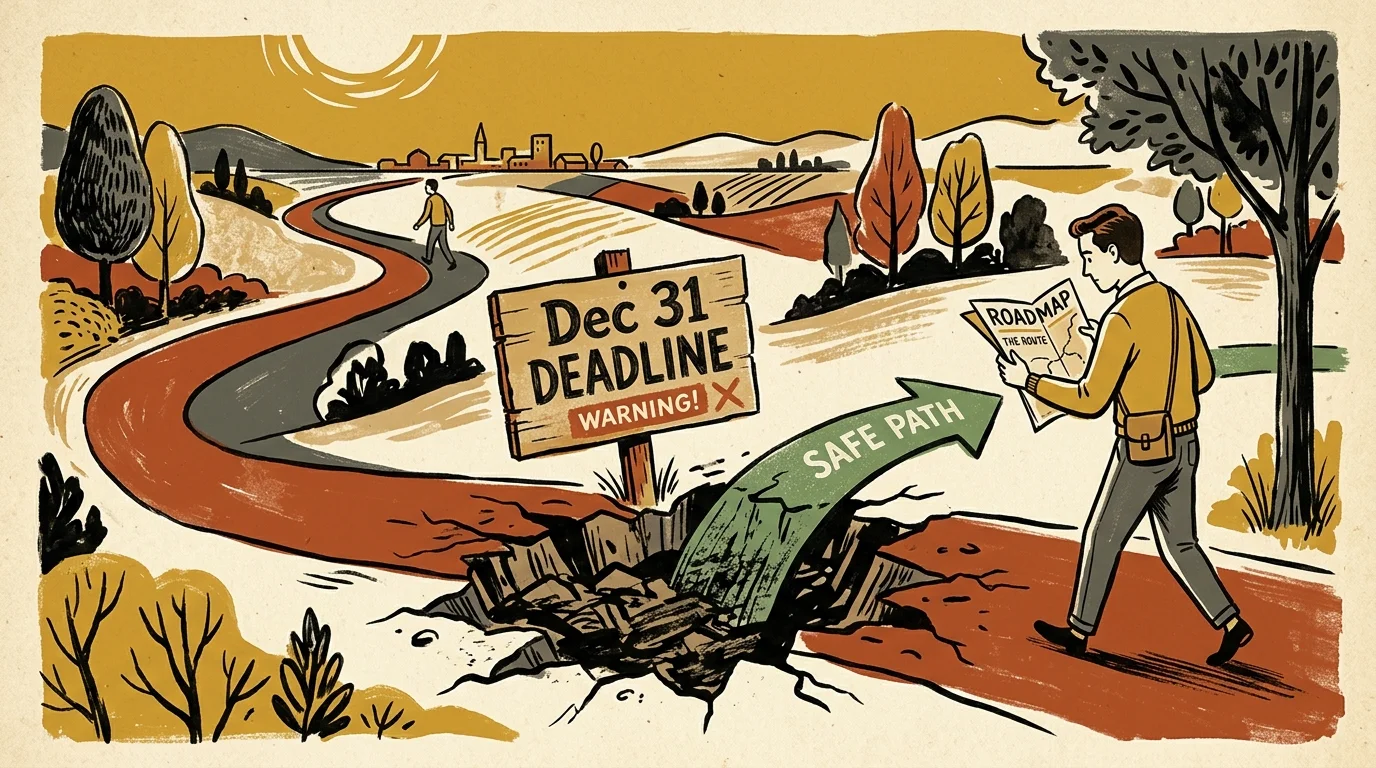
Pitfalls to Watch For
Navigating age 73 retirement rules requires precise execution. Making careless operational errors can result in steep financial penalties and unnecessary tax liabilities.
- Missing the Annual Deadline: Failing to take your full annual RMD by December 31 (or April 1 for your deferred first RMD) triggers an IRS excise tax penalty. While SECURE 2.0 lowered this severe penalty from 50 percent down to 25 percent of the unwithdrawn amount, it remains a costly mistake. If you correct the error promptly within the statutory correction window and file IRS Form 5329, the penalty drops to 10 percent.
- Miscalculating Multi-Account Rules: A widespread mistake involves mixing up aggregation rules. You can aggregate the calculated total RMD amounts from multiple Traditional IRAs and take the full sum from a single IRA account. However, you cannot do this with 401(k) or 403(b) accounts. Each employer retirement plan requires its own independent RMD calculation and individual withdrawal.
- Ignoring IRMAA Threshold Cliffs: IRMAA brackets are strict financial cliffs, not progressive steps. Pushing your MAGI just $1 over a tier threshold forces you to pay the higher premium rate on your Medicare coverage for the entire year. Always model your total income before taking discretionary distributions alongside your RMDs.
- Assuming Roth 401(k)s Still Require RMDs: Prior to 2024, employer-sponsored Roth accounts required RMD calculations unless rolled over to a Roth IRA. SECURE 2.0 eliminated lifetime RMDs for designated Roth 401(k) and 403(b) accounts starting in 2024, so double-check that you do not prematurely pull tax-free growth out of these accounts.